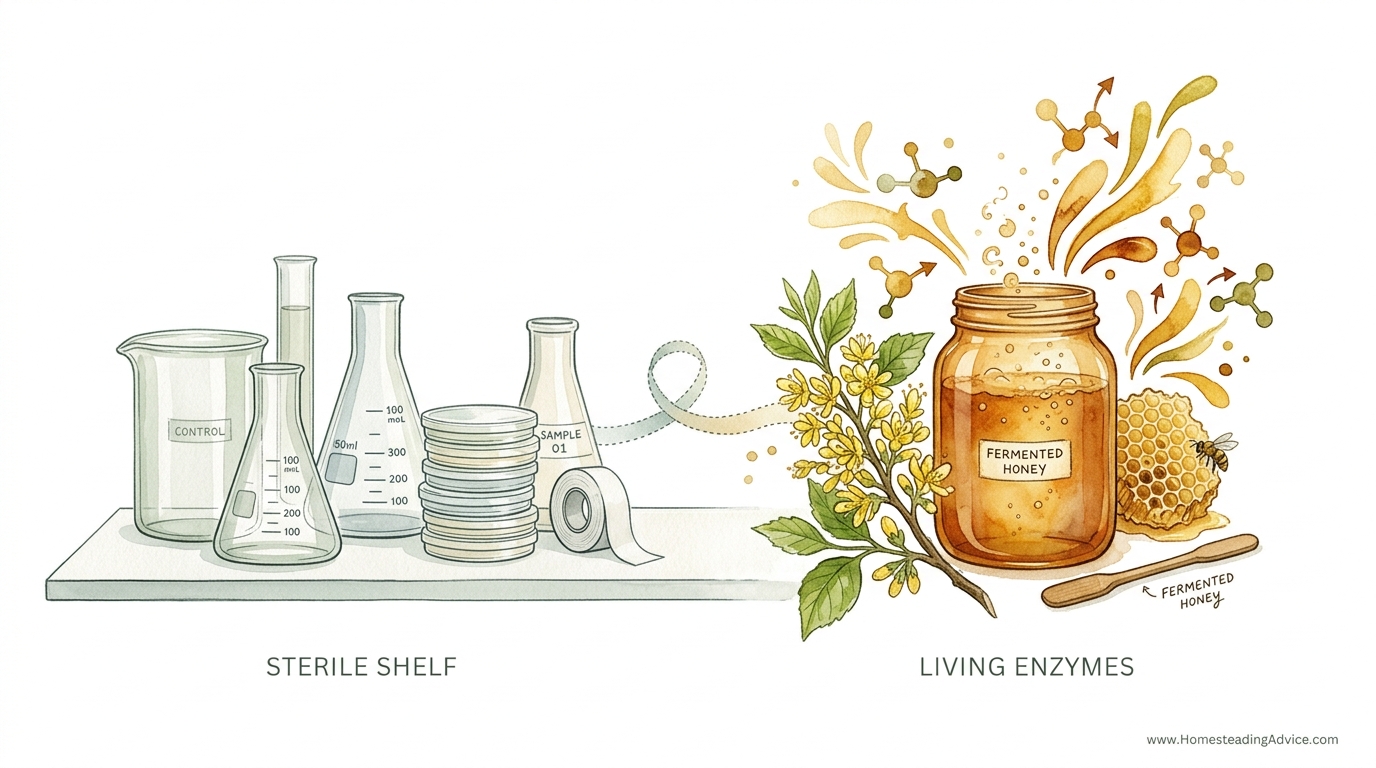
The Living Cleanser: Transitioning to Fermented Honey for Skin Health
Your store-bought cleanser is a sterile chemical soup; your skin is a living ecosystem that needs ‘live’ food. We have been taught to kill all bacteria on our skin, but that’s why your face is dry and irritated. Raw, fermented honey contains living enzymes and ‘good’ bacteria that act as a natural probiotic for your skin’s microbiome. Stop using dead, preserved liquids and start using the living power of the hive.
Modern skincare relies on the concept of total sterilization. We use harsh surfactants like sodium lauryl sulfate to strip away oils, followed by synthetic preservatives to ensure a plastic bottle can sit on a shelf for three years without growing mold. While this makes for a stable product, it ignores the biological reality of your skin. Your face is home to trillions of microorganisms that form a protective barrier known as the acid mantle and the microbiome.
When you use a “sterile” cleanser, you are effectively carpet-bombing this delicate landscape. This leads to a cycle of inflammation, acne, and premature aging as your skin struggles to recalibrate its pH and bacterial balance. Fermented honey offers an ancestral alternative. It is a substance that is biologically active, shelf-stable through its own chemistry, and perfectly tuned to the needs of human skin.
Shifting your routine toward living enzymes isn’t just about “going natural.” It is about restoring a functional biological relationship with the environment. In the following guide, we will explore how to harness the fermentation process to create a cleanser that cleanses, heals, and feeds your skin simultaneously.
How To Make Fermented Honey Face Wash
Fermented honey face wash is a preparation of raw, unpasteurized honey that has been intentionally introduced to a small amount of moisture to activate its latent yeasts and bacteria. In its concentrated state, honey is too “dry” for microbes to grow because its high sugar content draws water out of bacterial cells through osmosis. However, when we slightly dilute it, we “wake up” the enzymes and beneficial microbes, transforming a simple sweetener into a potent probiotic skincare tool.
This process is essentially the first stage of making mead, an ancient honey wine, but we stop the process long before it becomes alcohol. The goal is to reach a state where the honey is “active”—bubbling slightly and producing organic acids like gluconic acid, which acts as a gentle alpha-hydroxy acid (AHA) for the skin. This isn’t a new invention; it is a return to how honey was handled before industrial processing made it a static, dead syrup.
In a real-world setting, this cleanser replaces your morning and evening soap. It is used on a damp face, massaged into the skin, and rinsed away. Because honey is a natural humectant, it doesn’t strip the skin of moisture. Instead, it leaves a microscopic layer of “good” bacteria and enzymes that continue to work throughout the day to protect your face from pathogens and environmental stress.
How to Ferment Honey for Skincare
Creating a fermented honey cleanser requires patience and a basic understanding of how wild yeasts behave. You cannot use the clear, liquid honey found in plastic bear-shaped bottles at the supermarket. That honey has been heated (pasteurized) and filtered, which kills the enzymes and removes the pollen and propolis that fuel fermentation. You must start with raw, unfiltered honey.
To begin the process, you will need a clean glass jar and a source of moisture. Pure spring water is excellent, but for added benefits, many practitioners use herbal infusions like rosewater or chamomile tea. The ratio is the most important factor. If you add too much water, the honey will ferment too quickly and may eventually turn into vinegar or mold. If you add too little, nothing will happen.
A standard starting ratio is 4 parts raw honey to 1 part liquid. For example, you might mix 120 ml (4 oz) of raw honey with 30 ml (1 oz) of distilled water or rosewater. Stir these together thoroughly in your glass jar. You will notice the honey becomes thinner and easier to spread. This is the ideal consistency for a face wash.
Once mixed, cover the jar with a breathable cloth or a loose lid. Place it in a warm spot in your kitchen, ideally between 70°F and 80°F (21°C to 27°C). Every day, give the mixture a vigorous stir. This introduces oxygen and helps the wild yeasts stay active. Within 3 to 7 days, you may notice tiny bubbles forming on the surface or a slight “tangy” scent. This is the sign that the enzymes are waking up and the fermentation has begun.
After about two weeks of this daily stirring, the honey is “active” enough to use. You can move it to a cooler spot to slow down the fermentation, or simply start using it daily. The fermentation will continue slowly over time, increasing the concentration of beneficial probiotics and organic acids. Use a clean spoon or a pump dispenser to avoid introducing new, unwanted bacteria from your hands into the jar.
The Benefits of Living Honey on the Skin
The primary advantage of fermented honey over commercial cleansers is its ability to support the skin’s acid mantle. Human skin is naturally acidic, with a pH usually between 4.7 and 5.5. Most commercial soaps are alkaline, which shocks the skin and destroys its protective barrier. Honey has a natural pH of about 3.9, which is slightly more acidic than the skin, making it an ideal “toner” and cleanser that encourages a healthy environment for beneficial flora.
Another measurable benefit is the presence of gluconic acid. During fermentation, the enzyme glucose oxidase breaks down sugars into gluconic acid and a very low level of hydrogen peroxide. The gluconic acid acts as a mild exfoliant, loosening dead skin cells without the need for harsh scrubbing. This results in a brighter complexion and smoother texture over time, achieved through biology rather than friction.
Probiotic support is perhaps the most unique benefit. Fermented honey contains strains of Lactobacillus and wild yeasts that are native to the beehive. When applied to the face, these microbes compete with “bad” bacteria like P. acnes, which is responsible for breakouts. By populating your skin with “good” bacteria, you create a living shield that prevents infections and reduces redness and inflammation.
Finally, honey is a powerful humectant. It has the ability to draw moisture from the air and bind it to the skin. Unlike oil-based cleansers that can sometimes sit on top of the skin, or soap-based cleansers that dry it out, fermented honey ensures the skin remains hydrated throughout the cleansing process. This makes it particularly effective for those with “combination” skin, where some areas are oily and others are flaky and dry.
Challenges and Common Mistakes
The most common mistake beginners make is using the wrong type of honey. If the label doesn’t say “raw” and “unfiltered,” it is likely a dead product. Pasteurized honey will not ferment; it will simply sit in the jar and eventually grow mold because its natural defenses have been compromised by heat. Always source your honey from a local beekeeper or a trusted brand that guarantees no heat treatment has been used.
Another pitfall is the introduction of too much water. If your mixture is more than 25% water, the yeast can become too aggressive. While this is great for making mead, for a face wash, it can lead to a thin, messy product that smells strongly of yeast or alcohol. Stick to the 4:1 ratio and monitor the scent. It should smell sweet, floral, and slightly tangy, but never like rotting fruit or harsh vinegar.
Hygiene during the mixing process is also critical. While honey is naturally antibacterial, your diluted mixture is more vulnerable than pure honey. Ensure your glass jars are sterilized with boiling water before use. When you go to wash your face, do not dip your wet fingers directly into the main supply jar. This introduces tap water and skin bacteria into the ferment, which can lead to spoilage. Use a dedicated scoop or a squeeze bottle.
Temperature fluctuations can also stall the process. If your kitchen is too cold (below 60°F or 15°C), the fermentation will be incredibly slow. If it is too hot (above 90°F or 32°C), the yeast can become stressed and produce unpleasant odors. Find a consistent, room-temperature spot away from direct sunlight to let your living cleanser mature.
Limitations: When Fermented Honey May Not Be Ideal
While fermented honey is a powerhouse for most, it is not a universal solution for every skin condition. Individuals with a known allergy to bee stings, pollen, or propolis should exercise extreme caution. Even though the honey is fermented, it still contains trace amounts of these substances. A patch test on the inner forearm for 24 hours is mandatory before applying it to the entire face.
For those with severe fungal acne (pityrosporum folliculitis), fermented products can sometimes exacerbate the issue. Fungal acne is caused by an overgrowth of yeast in the hair follicles. Adding more “living” yeast and sugars to the skin can, in some cases, provide fuel for the condition rather than curing it. If you suspect your acne is fungal in nature, consult a professional before moving to a fermented skincare routine.
There is also the practical limitation of time and “mess factor.” Honey is sticky. It does not foam like traditional soap. For people used to the instant gratification of a high-lather cleanser, the transition to honey can feel “unclean.” It requires more rinsing and a different mindset. Furthermore, because it is a living product, you cannot simply leave it in a hot car or a sunny windowsill without risking the jar exploding from pressure or the product spoiling.
Comparison: Sterile Shelf vs. Living Enzymes
| Feature | Sterile Commercial Cleanser | Living Fermented Honey |
|---|---|---|
| Active Ingredients | Synthetic acids, surfactants | Live enzymes, organic acids, probiotics |
| Impact on Microbiome | Destructive/Sterilizing | Supportive/Restorative |
| pH Balance | Often alkaline (pH 7-9) | Naturally acidic (pH 3.5-4.5) |
| Shelf Life | 2-3 years (Chemical preservatives) | 6-12 months (Self-preserving) |
| Hydration | Stripping (requires moisturizer) | Humectant (retains moisture) |
As the table shows, the primary trade-off is between convenience and biological harmony. Commercial cleansers are designed for the supply chain—they must stay exactly the same from the factory to the shower. Fermented honey is designed for the skin—it is a changing, evolving substance that works with your body’s natural rhythms rather than against them.
Practical Tips and Best Practices
To get the most out of your fermented honey face wash, follow these best practices for application and storage:
- The Warm Rinse: Always splash your face with warm water before applying the honey. This opens the pores and thins the honey slightly upon contact, allowing the enzymes to penetrate more deeply.
- The Two-Minute Mask: Don’t just wash and rinse. Let the honey sit on your skin for 2 to 5 minutes while you brush your teeth or get ready. This gives the live probiotics time to interact with your skin’s surface.
- Storage Matters: Store your main jar in a cool, dark cupboard. If you live in a very hot climate, you can keep it in the refrigerator to slow the fermentation, though it will become very thick and may need to be warmed in your hands before use.
- Herbal Synergies: When diluting your honey, use herbal teas instead of plain water. Calendula is excellent for healing, lavender for calming, and green tea for antioxidant protection. Make sure the tea is completely cooled to room temperature before mixing.
- Consistency is Key: You may experience a “purging” period of a few days as your skin’s pH shifts and the old, dead layers of skin are exfoliated by the honey. Stick with it for at least two weeks to see the true results.
Advanced Considerations: Customizing Your Ferment
Once you are comfortable with the basic fermentation process, you can begin to customize your cleanser based on your specific skin needs. Serious practitioners often use different types of honey for different purposes. For instance, Buckwheat honey is exceptionally high in antioxidants and has a higher mineral content than lighter honeys, making it ideal for aging or sun-damaged skin.
Manuka honey from New Zealand or Kanuka honey are famous for their high Methylglyoxal (MGO) levels, which provide superior antibacterial activity. While expensive, using these as the base for a fermented wash can significantly accelerate the healing of chronic acne or eczema. You can also blend honeys—using 75% local raw wildflower honey and 25% Manuka to balance cost and efficacy.
Another advanced technique involves botanical maceration during the fermentation. You can add dried herbs like rose petals or elderflowers directly into the honey-water mixture. As the fermentation happens, the wild yeasts help break down the plant cell walls, extracting the beneficial phytochemicals more effectively than a simple oil infusion. After two weeks, you can strain the herbs out, leaving behind a potent, medicated honey wash.
Consider the timing of your “harvest.” A short ferment (1 week) will be sweeter and more hydrating. A long ferment (4-6 weeks) will be more acidic and better for oily or congested skin. By monitoring the scent and the way your skin feels, you can decide exactly when your living cleanser has reached its peak potency for your specific biology.
Examples and Scenarios
To understand how this works in a daily routine, consider these two scenarios:
Scenario A: The Acne-Prone Professional. Sarah has struggled with adult acne and oily skin. She switches to a fermented honey wash made with raw neem honey and a splash of thyme tea. She applies it every morning, leaving it on for three minutes. Within three weeks, the organic acids have cleared her clogged pores, and the probiotics have reduced the frequency of her breakouts. Her skin no longer produces excess oil because she is no longer stripping it with harsh chemicals.
Scenario B: The Dry-Skin Gardener. Jack spends hours outdoors and suffers from dry, wind-chapped skin. He uses a “young” fermented wash made with local clover honey and rosewater. This mixture is less acidic and focuses on the humectant properties of the honey. By washing with this living food, he maintains his skin’s moisture barrier even in harsh weather. The honey draws moisture into his skin, and the live enzymes repair the micro-tears caused by the elements.
In both cases, the users moved away from a “kill everything” mindset to a “feed the skin” approach. The results were not just cleaner skin, but healthier, more resilient skin that functions as it was evolutionarily designed to do.
Final Thoughts
Reclaiming your skincare from the “sterile chemical soup” of the modern industry is an act of self-reliance. It requires a shift in perspective—viewing your skin not as a dirty surface to be scrubbed, but as a garden to be tended. Fermented honey provides the perfect bridge between ancient wisdom and modern biological understanding, offering a way to cleanse that honors the living nature of the human body.
By making your own living cleanser, you remove the need for synthetic fragrances, hormone-disrupting preservatives, and harsh detergents. You replace them with a substance that has been prized for millennia for its healing properties, now enhanced by the power of controlled fermentation. This process doesn’t just clean your face; it restores the biological integrity of your skin’s microbiome.
Start with a small batch. Experiment with different honeys and herbal infusions. Observe how your skin responds when it is finally given the ‘live’ food it has been craving. As you move away from the sterile shelf and toward the living power of the hive, you will likely find that many of the skin issues you thought were “permanent” were simply reactions to a toxic environment. Your skin knows how to heal itself; sometimes, it just needs the right living tools to do the job.