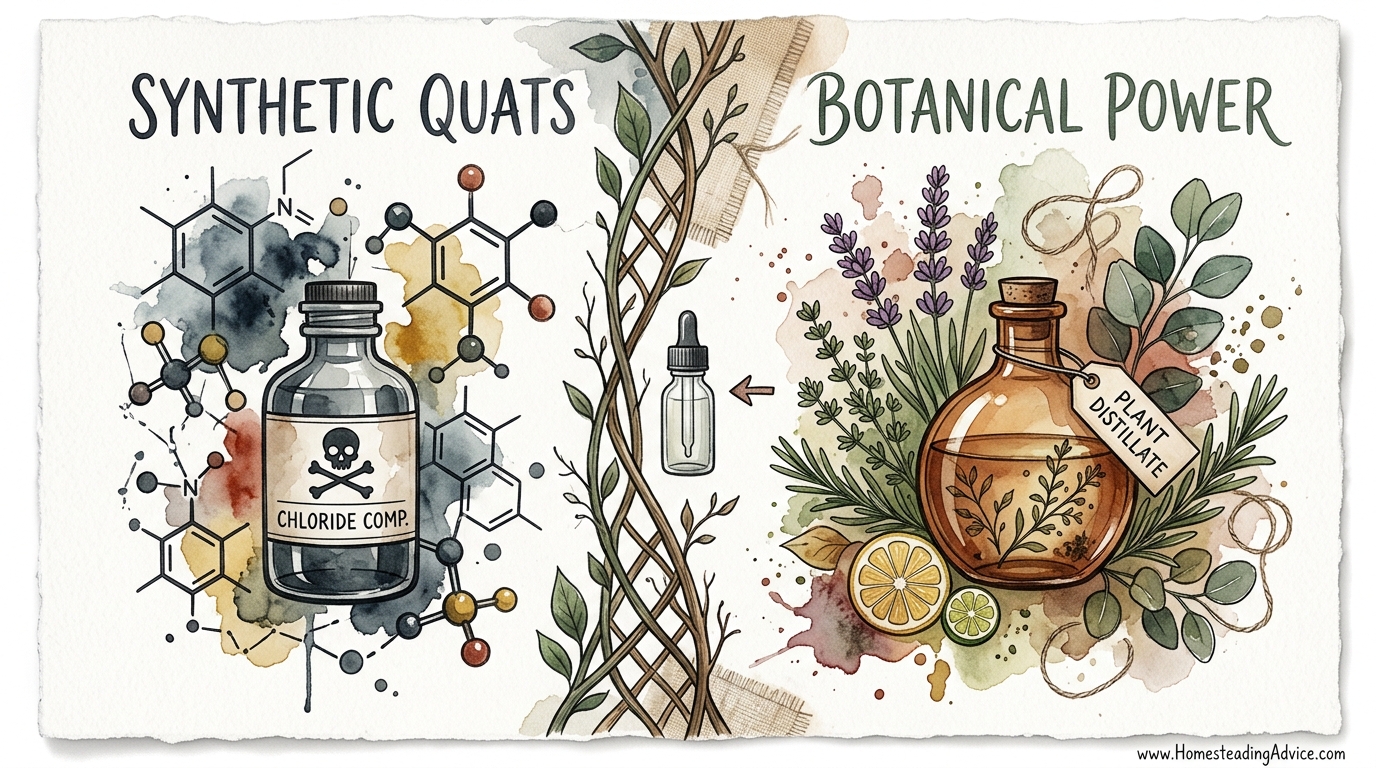
Your store-bought disinfectant kills 99.9% of bacteria, but it also leaves behind a persistent chemical film that your family is eating off the counter every single day. We were told that a ‘clean’ smell is a chemical one, but science is proving that these synthetic ‘quats’ are disrupting our microbiomes. Discover how to use the concentrated power of plants to sanitize your home without the toxic afterglow.
For generations, we have equated the sharp sting of bleach or the artificial scent of “lemon-fresh” aerosols with a safe home. This modern obsession with sterilization has come at a cost. We have traded traditional wisdom for convenience, filling our living spaces with Quaternary Ammonium Compounds—commonly known as “quats”—which are now linked to respiratory issues, skin irritation, and even reproductive concerns. Research suggests that inhaling these compounds can be up to 100 times more toxic to lung tissue than swallowing them, yet we spray them liberally in the very air our children breathe.
True cleanliness does not require a laboratory-grade toxic cocktail. The ancestors understood that the earth provides everything necessary to keep a homestead healthy. By turning back to botanical power, you can achieve a level of sanitation that rivals commercial products while supporting, rather than destroying, your family’s internal microbiome. This guide will walk you through the practical, no-nonsense methods for reclaiming your counters and your health.
How To Make Natural Surface Disinfectant At Home
Natural surface disinfectant is a solution derived from plant-based ingredients or simple mineral compounds designed to kill or irreversibly inactivate pathogens on non-porous surfaces. Unlike “green” cleaners that simply remove dirt, a true disinfectant must be potent enough to rupture the cell walls of bacteria like E. coli and Salmonella or denature the proteins of viruses. In a real-world homestead setting, this means using high-proof alcohols, stabilized hydrogen peroxide, or concentrated botanical oils like thymol.
You might use these solutions in the kitchen after prepping raw poultry, in the bathroom during a bout of seasonal illness, or on high-touch points like doorknobs and light switches. The goal is to reduce the microbial load to a level that the human immune system can easily manage, without leaving behind a residue that disrupts your skin’s natural barrier or your gut’s bacterial balance. Think of it as a tactical strike rather than a scorched-earth policy.
While vinegar and baking soda are excellent for general cleaning, they are often insufficient for heavy-duty disinfection. A real natural disinfectant leverages the “pioneer grit” of chemistry—using the volatile nature of alcohol or the oxidative power of peroxide to get the job done quickly and then evaporate into nothingness. There is no “afterglow” of chemicals here; once the surface is dry, the active agent is gone, leaving only a truly clean surface behind.
The Science of Botanical Power vs. Synthetic Quats
To understand why we are making the switch, we have to look at the enemy. Synthetic quats are “persistent” chemicals. This means they are designed to stay on a surface long after you have finished wiping. While the industry markets this as “long-lasting protection,” it actually means your food is coming into contact with pesticides every time you set an apple on the counter. These compounds work by attaching to the negatively charged membranes of bacteria, but they don’t know the difference between a pathogen and the beneficial bacteria on your skin.
Botanical power works differently. Ingredients like thymol—the active component in thyme oil—interact with the lipid bilayer of a germ’s cell membrane, making it leaky and eventually causing the cell to collapse. Alcohol works by denaturing proteins, essentially “cooking” the germ on contact. Because these ingredients are volatile, they do their work and then disappear. They do not linger in the dust of your home or accumulate in your body’s fat cells. Science is finally catching up to what our grandmothers knew: the most effective tools are often the simplest ones.
Using these natural agents requires a shift in mindset. You cannot simply “spray and wipe” if you want to kill 99.9% of germs. You must respect the “dwell time”—the specific number of minutes a surface must remain wet for the agent to do its job. Commercial sprays use thickeners to keep the chemicals wet longer, but with natural solutions, you might need to re-apply or wait a full ten minutes to ensure the job is done. This patience is the hallmark of a self-reliant home.
Essential Ingredients for Your Natural Sanitizing Arsenal
Every effective natural disinfectant relies on a few “heavy hitters.” Having these on your shelf ensures you are prepared for any mess without needing to run to the store. Here are the core components you need to understand:
- Isopropyl Alcohol (70%): Many people reach for 91% or 99% alcohol, thinking stronger is better. In reality, 70% is the “sweet spot” for disinfection. The 30% water content acts as a catalyst, slowing evaporation and helping the alcohol penetrate the cell wall of the bacteria. Without that water, the alcohol would simply dry out the outside of the germ, leaving the inside alive in a dormant state.
- Hydrogen Peroxide (3%): This is one of the safest and most effective oxidizers available. It breaks down into water and oxygen, leaving absolutely zero toxic residue. It is particularly effective against tough-to-kill viruses and mold spores. It must be stored in a dark bottle, as light breaks it down into plain water.
- Thymol / Thyme Essential Oil: Thymol is one of the few botanical ingredients actually registered by the EPA for use against serious pathogens. It is a phenolic compound that effectively disrupts cell membranes. It is powerful, so a little goes a long way.
- Acetic Acid (White Vinegar): While not a registered disinfectant for all pathogens, 5% acetic acid is a potent sanitizer for common kitchen bacteria like E. coli. It is best used for daily maintenance rather than deep-dish infection control.
- Citric Acid: Often found in citrus peels, citric acid is a natural descaler and mild disinfectant. It is especially useful in the bathroom for breaking down hard water deposits where bacteria like to hide.
The Role of “Dwell Time” in Natural Disinfection
Dwell time is the most overlooked factor in home sanitation. If you spray a surface and immediately wipe it dry, you have likely removed the dirt but left the bacteria behind. For 70% alcohol to be effective against most vegetative bacteria, it needs to stay wet for at least 30 seconds to 1 minute. Hydrogen peroxide often requires 5 to 10 minutes for full disinfection. Thyme-based solutions usually need 10 minutes of contact time. Always ensure the surface is visibly wet for the duration recommended for that specific ingredient.
Step-by-Step Recipes for Natural Disinfection
Creating these solutions at home is straightforward. Use glass spray bottles when possible, as high concentrations of essential oils or alcohol can degrade some plastics over time. Label every bottle clearly with the ingredients and the date it was made.
The “Kitchen Commander” Alcohol Spray
This is your go-to for daily counter maintenance and quick sanitizing after handling food. It evaporates quickly and is safe for most sealed surfaces.
- 1.5 cups (355 ml) of 70% Isopropyl Alcohol
- 0.5 cup (118 ml) of Distilled Water
- 15 drops of Lemon Essential Oil (for grease cutting)
- 10 drops of Eucalyptus Essential Oil (for scent)
Mix ingredients in a 16 oz (473 ml) glass spray bottle. Shake gently before use. Spray on a pre-cleaned surface and allow it to sit for at least 60 seconds before wiping. Note: Do not use this on unsealed stone or finished wood, as alcohol can strip the finish.
The “Deep Clean” Peroxide Punch
Use this for bathroom surfaces, sinks, and areas where mold or heavy bacterial loads are a concern. It is a powerful oxidizer.
- 2 cups (473 ml) of 3% Hydrogen Peroxide
- 10 drops of Tea Tree Oil
- 5 drops of Peppermint Essential Oil
Combine in a dark-colored spray bottle (peroxide is light-sensitive). Spray liberally and let it sit for a full 10 minutes. If the surface dries before the time is up, spray again. Wipe clean with a microfiber cloth. Do not mix this with vinegar, as it creates peracetic acid, which can be irritating to the lungs and skin.
The “Botanical Barrier” Thymol Spray
This recipe mimics commercial botanical disinfectants. It is excellent for high-traffic areas like doorknobs.
- 2 cups (473 ml) of Hot Distilled Water
- 1 teaspoon (5 ml) of Thyme Essential Oil (standardized for high thymol content)
- 1 teaspoon (5 ml) of Liquid Castile Soap (acts as an emulsifier)
Mix the soap and oil first, then slowly add the hot water. The soap helps the oil stay suspended in the water. Shake well before every use. This requires a 10-minute dwell time to reach its full disinfecting potential.
Benefits of Choosing Botanical Disinfectants
The transition to natural disinfection offers more than just a clear conscience. It provides measurable benefits for the health of your home environment and your wallet. By removing synthetic quats, you are actively lowering the Volatile Organic Compound (VOC) levels in your indoor air. This leads to fewer headaches, reduced asthma triggers, and a home that feels truly fresh rather than artificially masked.
One of the greatest advantages is the protection of the home microbiome. We are beginning to understand that “too clean” is actually a health hazard. Children raised in overly sterile environments are more prone to allergies and autoimmune issues. Natural disinfectants are “targeted”; they kill the bad actors but don’t leave a persistent residue that kills the beneficial bacteria we need for a healthy immune system. This creates a balanced biological environment that supports long-term health.
Cost is another significant factor. A gallon of white vinegar or a bottle of 70% alcohol costs a fraction of what you would pay for a name-brand “disinfecting wipe.” By making your own, you are also reducing plastic waste and the carbon footprint associated with shipping heavy, water-filled plastic bottles across the country. Self-reliance is often the most economical path.
Common Mistakes and How to Avoid Them
Moving away from commercial chemicals requires a bit of a learning curve. Many people make the mistake of mixing “natural” ingredients that shouldn’t be together. For instance, mixing vinegar and bleach creates toxic chlorine gas. Even mixing vinegar and hydrogen peroxide creates peracetic acid—while it is a great disinfectant, it is highly corrosive and can be dangerous to handle in a home setting without proper equipment.
Another frequent error is failing to clean before disinfecting. Disinfectants are not cleaners. If a counter is covered in breadcrumbs and grease, the disinfectant cannot reach the surface to kill the germs hiding underneath. Always use soap and water to remove the “soil” first, then apply your disinfectant to the clean surface. This ensures the germs have nowhere to hide.
Finally, respect the expiration dates. Hydrogen peroxide loses its “fizz” (its oxidative power) relatively quickly once opened, especially if exposed to light. DIY water-based sprays without preservatives can grow their own bacteria over time. It is best to make small batches that you can use within 2 to 4 weeks. If a solution starts to look cloudy or smell off, pour it out and start fresh.
Limitations: When Botanical May Not Be Enough
While botanical solutions are powerful, they are not a universal cure-all. In a serious medical situation—such as a confirmed case of C. diff or an outbreak of a highly resistant norovirus—natural solutions may fall short. Certain pathogens produce “spores” which are essentially armored shells that resist alcohol and mild acids. In these rare cases, a hospital-grade disinfectant or a strong bleach solution may be necessary to break the cycle of infection.
Porous surfaces like unsealed wood, granite, or marble present another challenge. Most disinfectants (both synthetic and natural) are designed for hard, non-porous surfaces. If a germ is deep inside the grain of a wooden cutting board, a quick spray of alcohol won’t reach it. In these instances, mechanical cleaning (scrubbing with salt and lemon or high-heat dishwashing) is often more effective than topical sprays.
Environmental factors also play a role. If you live in a very dry climate, your sprays might evaporate faster than the required dwell time. You may need to spray the surface, cover it with a damp cloth, or re-apply the solution several times to ensure it stays wet for the full ten minutes. Understanding these boundaries is what separates a beginner from a master of home sanitation.
Synthetic Quats vs. Botanical Power: A Comparison
| Feature | Synthetic Quats (Store-Bought) | Botanical Power (DIY) |
|---|---|---|
| Residue | Leaves a persistent chemical film. | Evaporates or leaves biodegradable residue. |
| Health Impact | Linked to asthma and skin irritation. | Low toxicity; supports home microbiome. |
| Dwell Time | Typically 4–10 minutes. | Typically 1–10 minutes (varies by ingredient). |
| Cost | $5–$15 per bottle. | $0.50–$2.00 per bottle. |
| Safety | Warning labels: “Harmful if swallowed.” | Generally food-safe after drying. |
Practical Tips and Best Practices
To get the most out of your natural disinfection routine, adopt these simple habits. First, use the “Two-Step Method.” Step one is cleaning with a simple soap-and-water solution to remove debris. Step two is applying your disinfectant. This ensures the active ingredients are actually touching the pathogens rather than just sitting on top of a layer of dust.
Invest in high-quality microfiber cloths. These are not your average rags; the “micro” fibers are small enough to physically trap and remove bacteria from a surface. Using a microfiber cloth in conjunction with 70% alcohol is one of the most effective ways to reduce the germ count in your home. Be sure to wash these cloths in hot water (60°C or 140°F) and dry them on high heat to kill any trapped bacteria.
Remember to label your bottles with the “Kill Time.” Writing “Leave wet for 1 minute” or “Leave wet for 10 minutes” directly on the bottle helps ensure that every member of the family uses the product correctly. This consistency is what builds a truly safe and healthy home. If you are using essential oils, keep the bottles in a cool, dark cupboard to prevent the oils from oxidizing and losing their antimicrobial properties.
Advanced Considerations: The Home Microbiome
For those looking to go beyond basic sanitation, consider the health of your home’s microbiome. Recent studies suggest that “re-wilding” our homes with beneficial bacteria might be the next frontier in health. Some practitioners are now following a disinfection routine with a “probiotic mist”—spraying surfaces with beneficial bacteria after they have been sanitized. This ensures that the “empty real estate” on your counter is claimed by good bacteria before the bad ones can return.
You can also explore the use of steam. High-pressure steam (above 100°C or 212°F) is a chemical-free way to achieve medical-grade sterilization on many surfaces. For a homesteading practitioner, a small steam cleaner can be a powerful ally, especially for floors and tile grout where bacteria tend to linger. Steam effectively “explodes” the cell walls of almost any pathogen it touches without the need for any liquid agents at all.
Understand that your home is a living ecosystem. Total sterilization is an impossible and undesirable goal. The aim of natural disinfection is to manage the population of harmful pathogens while allowing the beneficial ones to thrive. This creates a resilient environment where your family’s immune system can stay strong and active.
Practical Scenarios: Natural Disinfection in Action
Imagine you have just finished carving a raw chicken on your kitchen island. The first step is to wipe away any visible juice with a soapy rag. Once the surface looks clean, you reach for your 70% alcohol spray. You mist the entire area until it is visibly wet and walk away for sixty seconds. By the time you return, the alcohol has evaporated, the proteins of any lingering Salmonella have been denatured, and you are ready to roll out cookie dough on that same surface without a second thought.
In another scenario, a family member has come home with a stomach bug. You focus on high-touch points: the toilet handle, the faucet, and the light switches. For these, you use your Hydrogen Peroxide Punch. You spray the surfaces and let them remain wet for a full ten minutes while you care for the patient. This extended dwell time is crucial for neutralizing viruses. After ten minutes, you wipe the surfaces clean, knowing that the peroxide has done its work and safely reverted back into water and oxygen.
These scenarios demonstrate that natural disinfection is not about making compromises; it is about making better choices. It requires a few more minutes of patience and a bit more knowledge, but the result is a home that is truly safe for everyone who lives there.
Final Thoughts
Reclaiming your home from the “chemical clean” myth is a journey back to self-reliance. Your store-bought disinfectant might promise a germ-free life, but it delivers a toxic film that impacts your health in ways we are only beginning to understand. By turning to the concentrated power of plants and simple minerals, you are choosing a path that respects the biological reality of your home.
The recipes and methods outlined here are more than just cleaning tips; they are tools for a more intentional way of living. Whether you are using the sharp efficiency of alcohol or the deep oxidative power of peroxide, you are taking control of your environment. You are ensuring that “clean” actually means “healthy.”
Do not feel like you have to change everything overnight. Start by replacing one bottle of synthetic spray with a homemade version. Watch how the air in your home changes. Notice the peace of mind that comes from knowing your children are eating off a surface that is actually safe. Experiment with these methods, find what works for your homestead, and share that wisdom with others. True cleanliness is a legacy worth passing on.