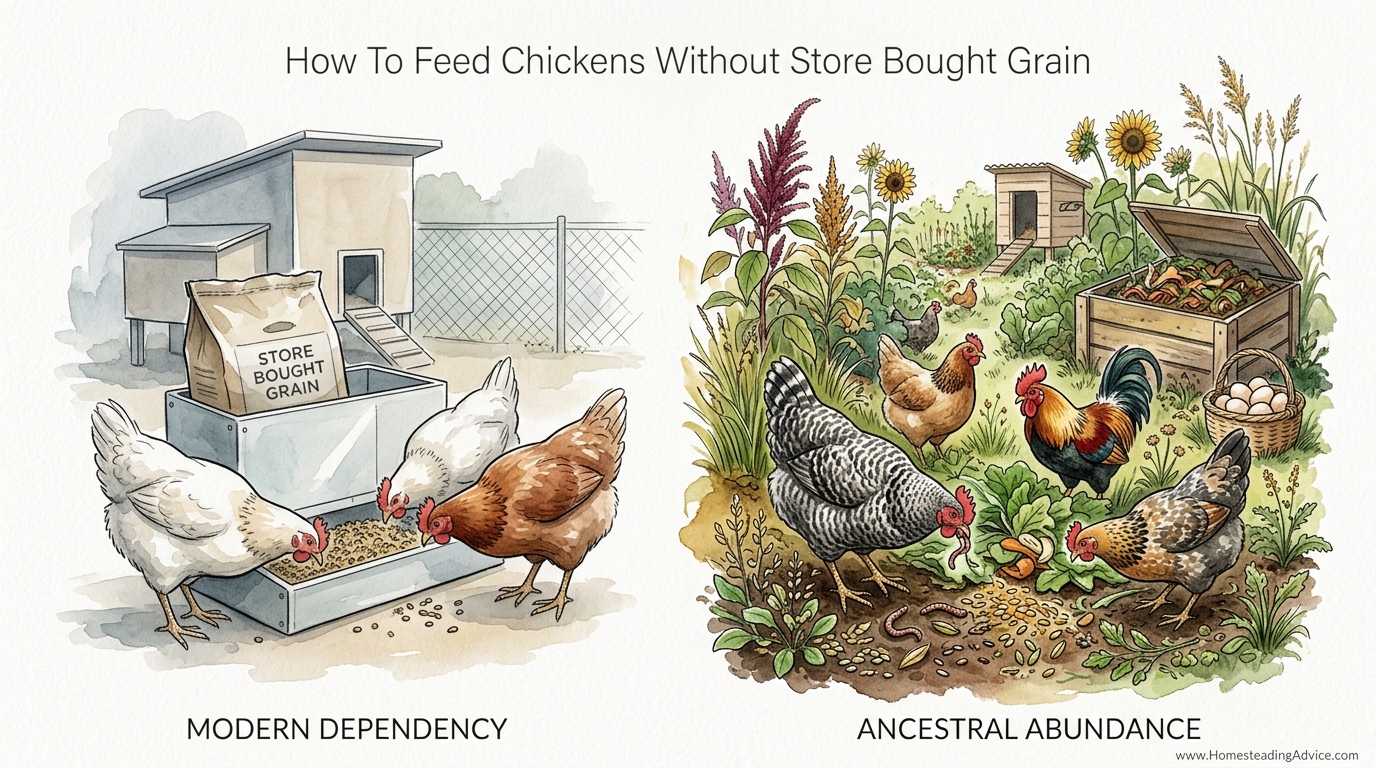
If the feed store closed tomorrow, would your chickens be starving or thriving? Ancient wisdom knew that chickens aren’t grain-eaters; they are forest-floor scavengers. We’ve traded their natural health for the convenience of a brown bag. By restoring a living ecosystem in your run, you can slash your feed costs by 70% while producing eggs with twice the nutrients.
Modern dependency on high-carbohydrate cereal grains like corn and soy is a recent invention. For thousands of years, the domestic fowl survived on a diverse diet of insects, fallen fruit, seeds, and leafy greens. This ancestral abundance provided a complex spectrum of amino acids that no single-source commercial pellet can replicate. When you shift your flock from a consumer-based model to a producer-based ecosystem, you move closer to true homestead self-reliance.
Success in grain-free feeding requires a transition from “providing calories” to “managing a habitat.” You are no longer a delivery driver for a feed mill; you are the architect of a mini-forest. This guide will walk you through the biological needs of your birds and the practical systems needed to meet those needs using the resources already available on your land.
How To Feed Chickens Without Store Bought Grain
Feeding chickens without store-bought grain is the practice of replacing commercial, monoculture-based feeds with a diverse, multi-trophic diet sourced from a managed ecosystem. It is a system where the chicken run becomes a production site for protein and minerals rather than just a place of confinement. This method exists because it aligns with the natural digestive physiology of the chicken, which is optimized for high-protein insects and varied plant matter.
In the real world, this is used by permaculturists, regenerative farmers, and self-sufficient homesteaders who want to decouple their food security from global supply chains. Think of your chicken run as a living buffet. Instead of a single bowl of pellets, your chickens have access to a “compost canteen” full of grubs, a “pond pharmacy” of high-protein aquatic plants, and a “perennial pantry” of forage. This approach transforms the chicken from a cost-center into a valuable partner that tills soil, controls pests, and cycles nutrients back into the earth.
The Biological Blueprint: What Chickens Actually Need
Understanding the nutritional floor is critical before removing the grain crutch. Modern high-production breeds, such as Rhode Island Reds or Leghorns, require specific nutrient levels to maintain their intense laying cycles.
The Protein and Amino Acid Puzzle
Chickens need approximately 16% to 18% crude protein for consistent egg production. However, “crude protein” is a blunt measurement. The real focus must be on limiting amino acids, specifically methionine and lysine. Most cereal grains are naturally low in methionine, which is why commercial mills add synthetic versions. In a natural system, you must source these from animal proteins like insects, worms, and small amounts of fish or meat scraps. Black Soldier Fly Larvae (BSFL) are a powerhouse here, containing 35% to 42% protein and significant levels of calcium.
The Energy Requirement
Carbohydrates provide the “fuel” for body heat and movement. While grains are the standard source, chickens can thrive on calorie-dense root vegetables, fallen fruits, and oilseeds. In cold climates, energy requirements spike as birds burn calories just to stay warm. Providing 5% to 15% of the diet as high-fat seeds like sunflowers can help bridge this gap.
Minerals and Calcium
A single eggshell contains about 2 grams (0.07 oz) of calcium. If the diet lacks this, the hen will leach calcium from her own bones, eventually leading to cage layer fatigue or soft-shelled eggs. While commercial feed adds limestone, a natural system relies on crushed eggshells, oyster shells, and calcium-rich greens like comfrey or azolla.
The Protein Pillars: Culturing Live Feed
Insects are the most bioavailable protein source for poultry. By culturing them on-site, you turn “waste” into the most expensive component of a chicken’s diet.
1. The Black Soldier Fly Larvae (BSFL) System
The Black Soldier Fly (Hermetia illucens) is perhaps the most efficient tool for grain-free feeding. These flies do not sting, do not bite, and do not carry diseases. They are nature’s premier waste processors.
- The Setup: Use a specialized bin or a modified plastic tote (approximately 75 liters or 20 gallons) with a 35-degree ramp leading to a harvest bucket.
- The Feed: Fill the bin with kitchen scraps, overripe garden produce, or even coffee grounds.
- The Harvest: As the larvae reach the pre-pupae stage, they instinctively climb the ramp to find a dry place to pupate. They drop into your collection bucket—clean, high-protein, and ready to serve.
- Nutrient Profile: BSFL contain up to 42% protein and 5% calcium by dry weight.
2. Managed Compost Scavenging
Instead of keeping your compost in a closed bin, build a “compost canteen” directly in or adjacent to the run.
- Layering: Build a large pile (at least 1 cubic meter or 35 cubic feet) of carbon-rich woodchips or leaves mixed with nitrogen-rich manure and kitchen scraps.
- The Insect Buffet: This pile becomes a breeding ground for earthworms, isopods (pill bugs), and various grubs.
- Working the Pile: Let the chickens into the pile for 1–2 hours a day. They will till the material, accelerating decomposition while harvesting 20% to 40% of their daily protein needs from the life within the pile.
3. Vermicomposting for Chickens
Earthworms are a complete protein source, containing nearly 60% protein on a dry-matter basis and essential amino acids like lysine.
- Worm Beds: Maintain separate worm beds using Red Wigglers (Eisenia fetida).
- Controlled Harvest: Do not let chickens into the primary worm beds or they will decimate the population. Instead, harvest “handfuls” of worms or move the finished castings (filled with egg capsules) into the chicken run for the birds to discover.
The Perennial Pantry: Forage Plants for Poultry
Forage should make up the bulk of the “volume” in a grain-free diet. Focus on perennials that regrow every year to minimize labor.
1. Comfrey (Symphytum officinale)
Often called “chicken candy,” comfrey is a deep-rooted perennial that pulls minerals from the subsoil.
- Protein: Dried comfrey leaves can reach 20% to 25% protein.
- Management: Plant comfrey outside the run and “cut and carry” the leaves to the birds. If planted inside, chickens will eat it to the root and kill the plant.
2. Aquatic Greens: Azolla and Duckweed
If you have a small pond or even a plastic kiddie pool, you can grow these floating ferns.
- Growth Rate: Azolla can double its biomass every 3 to 5 days in ideal conditions.
- Nutrients: Duckweed (Lemna minor) can contain up to 40% protein when grown in nutrient-rich water.
- How to Feed: Scoop the greens out with a net and place them in a shallow bowl. These are excellent for hydration during summer months.
3. Jerusalem Artichokes (Sunchokes)
These are the ultimate winter energy storage crop.
- The Tuber: The tubers stay fresh in the ground even during freezing winters.
- The System: In late autumn or winter, when other forage is gone, turn the chickens into the sunchoke patch. They will dig up the high-carbohydrate tubers themselves.
Benefits of the Ecosystem Approach
Transitioning away from bagged grain offers measurable improvements to both the homestead budget and the health of the birds.
1. Drastic Cost Reduction
Feed typically accounts for 70% of the cost of raising chickens. By utilizing compost, insects, and perennial plants, many homesteaders report reducing their monthly out-of-pocket expenses to near zero.
2. Superior Egg Quality
Eggs from forest-scavenging chickens typically have “school-bus orange” yolks. This color comes from high levels of carotenoids and Omega-3 fatty acids found in greens and insects. These eggs often contain twice the Vitamin E and significantly more Vitamin A than standard supermarket eggs.
3. Health and Longevity
Chickens that scavenge are more active and less prone to obesity-related issues common in grain-fed flocks. The diverse diet strengthens their immune systems, often leading to lower mortality rates and longer productive laying lives.
Challenges and Common Mistakes
While natural feeding is rewarding, it is not as simple as “turning them loose.” There are several pitfalls that can lead to malnourished birds.
1. The “Starvation Transition”
A common mistake is cutting off grain cold-turkey. Chickens raised on pellets often don’t “know” how to forage. They must be taught. Always transition slowly, reducing grain by 10% each week while monitoring body weight and egg production. If egg shells become thin, you are moving too fast.
2. Overgrazing and “Dirt Lots”
Chickens are destructive. Without rotational grazing or protective “fencing ” over plant roots, they will turn a lush garden into a compacted dirt lot in weeks. Use the “Double Run System”: let the chickens into Area A while Area B regrows, then swap.
3. Amino Acid Gaps
If you rely only on kitchen scraps and grass, your birds will lack methionine. This leads to feather picking and egg eating. You must ensure they have access to concentrated protein sources like BSF larvae or earthworms to meet these specific biological requirements.
Limitations: When This May Not Work
Natural feeding requires more than just a coop; it requires land and climate management.
- Space Constraints: On a suburban lot of 0.1 hectares (0.25 acres) or less, it is difficult to grow enough biomass to sustain a large flock entirely. You may still need to supplement with some grain or brewery spent grains.
- Extreme Winters: In regions where the ground freezes solid for five months, scavenging is impossible. You must grow and store “fodder” (sprouted seeds) or root crops like pumpkins and sunchokes to provide winter calories.
- Modern Hybrids: High-performance “Production Reds” are bred for an 18% protein pellet. They may struggle to maintain their weight on a 100% natural diet compared to heritage breeds like Buckeyes, Brahmas, or Orpingtons, which are naturally better foragers.
Comparison: Grain-Fed vs. Ecosystem-Fed
| Feature | Commercial Grain System | Natural Ecosystem System |
|---|---|---|
| Monthly Cost | High ($30–$60 per 10 birds) | Low to Zero ($0–$10) |
| Nutritional Density | Standardized/Moderate | Superior (High Omega-3s/Vitamins) |
| Maintenance Labor | Low (Filling feeders) | Moderate (Managing compost/crops) |
| Resilience | Low (Supply chain dependent) | High (Independent) |
Practical Tips and Best Practices
If you want to start today, these small shifts can make a massive difference in your feed bill.
- Ferment Everything: Even if you are still using some grain, ferment it in water for 3 days. This increases the bioavailability of nutrients, adds probiotics, and makes the chickens feel full on 20% less food.
- The “Scrap Network”: Contact local juice bars for pulp, breweries for spent grain, or grocery stores for “past-prime” produce. These are free resources that can provide 50% of your flock’s calories.
- Sprout Your Seeds: If you buy whole grains, sprout them into 5 cm (2 inch) fodder. This turns a dry seed into a living plant, increasing Vitamin A levels and providing fresh greens in winter.
- Protect the Roots: Place 1 cm (0.5 inch) hardware cloth over your garden beds. The chickens can eat the greens that grow through the wire, but they cannot dig up the roots.
Advanced Considerations: The Food Forest Integration
Serious practitioners take the ecosystem model a step further by integrating the flock into an orchard or food forest.
Mulberry Trees as Automatic Feeders
Mulberries are often called the “Chicken Tree.” They produce high-protein fruit for several weeks in early summer. Plant these inside the run; the fruit falls directly to the ground, providing an automatic, self-harvesting calorie source.
Nitrogen-Fixing Shrubs
Plants like Sea Buckthorn or Siberian Pea Shrub provide both habitat and edible seeds. Siberian Pea Shrub seeds contain nearly 30% protein and can be a significant grain replacement in temperate climates.
The “Stick Divider” Method
To prevent chickens from compacting the soil, lay down large logs or branches in the run. This creates “micro-habitats” where bugs can breed undisturbed beneath the wood. Every few weeks, roll the log over to reveal a high-protein feast for the birds.
Example Scenario: A Day in the Life of a Grain-Free Flock
Consider a flock of 10 heritage hens on a 200 square meter (approx. 2,150 sq ft) managed lot.
07:00: The flock is released into the “Compost Canteen.” They spend 2 hours scratching through woodchips and kitchen scraps, finding approximately 10 grams (0.35 oz) of worms and grubs each.
10:00: The owner provides a bucket of fermented aquatic duckweed and azolla (grown in a 2-meter/6-foot plastic pool). This provides hydration and a protein boost.
13:00: The chickens are rotated into “Forage Paddock B,” where they graze on white clover and dandelion for several hours.
17:00: Before locking the coop, the owner offers a handful of sunflower seeds (grown on the property) to ensure the birds have enough fat to stay warm through the night.
Final Thoughts
Feeding chickens without store-bought grain is a return to a more resilient, honest form of animal husbandry. It requires us to stop seeing chickens as machines that turn pellets into eggs, and start seeing them as the forest creatures they are. When you build an ecosystem that supports their natural instincts, the rewards are measured in vibrant health, lower costs, and the deep satisfaction of self-reliance.
Experimentation is the key to success. Start by managing a small compost pile and planting a few comfrey crowns. Observe how your birds respond. As you build the complexity of your land, you will find that the brown bag from the feed store becomes less of a necessity and more of a distant memory.
By fostering a living landscape, you aren’t just feeding your chickens; you are healing your soil and securing your family’s food future. The path to abundance isn’t found in a warehouse—it’s growing right beneath your feet.