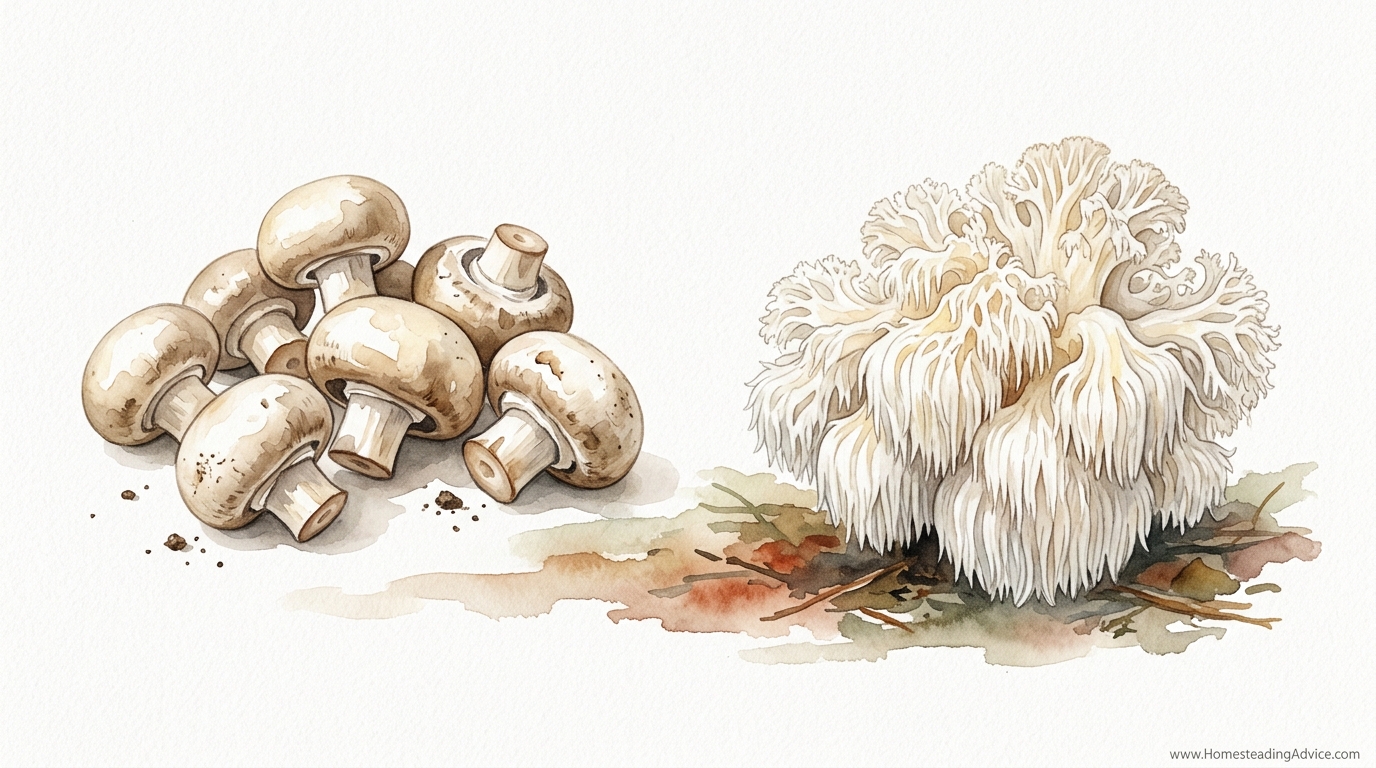
The mushroom in your grocery store sells for pennies, but this ‘shaggy’ fungus can pay your mortgage. Most people think of mushrooms as cheap grocery staples. But high-end restaurants are desperate for Lion’s Mane, Oysters, and Shiitakes. While the ‘Standard’ button mushroom is a race to the bottom, the ‘Pro’ exotic varieties offer massive margins and can be grown in vertical spaces you aren’t even using yet.
Success in this field does not require hundreds of acres or expensive heavy machinery. It requires a keen eye, a sterile environment, and the willingness to work with nature rather than against it. Gourmet mushrooms are a bridge between ancestral wisdom and modern self-reliance. They turn agricultural waste like straw and sawdust into high-value protein and medicine.
This guide will walk you through the grit and the science of specialty mushroom farming. Whether you are looking to supplement your kitchen table or build a full-scale commercial operation, the path remains the same. It is a journey of understanding the lifecycle of the fungus and mastering the climate that coaxes it into fruiting.
High Profit Mushroom Farming
Gourmet mushroom farming is the practice of cultivating specialty fungi—those outside the common button or portobello family—for their culinary and medicinal value. In the United States, the USDA defines specialty mushrooms as any species not belonging to the genus Agaricus. This includes the meaty Shiitake, the delicate Oyster, and the brain-boosting Lion’s Mane.
The market for these varieties is exploding because they cannot be easily mass-produced by industrial mega-farms. Unlike button mushrooms, which are grown in massive horizontal beds of compost, gourmet varieties often require specific wood-based substrates and precise climate controls. This creates a “structural monopoly” for the small-scale local grower. You can provide a level of freshness that a transcontinental shipping truck simply cannot match.
Financial potential in this niche is significant. While a pound of white button mushrooms might retail for $3 or $4, gourmet varieties like Lion’s Mane frequently command $10 to $20 per pound ($22 to $44 per kg) at farmers’ markets. High-end chefs are often willing to pay $12 to $18 per pound for consistent, high-quality Oyster mushrooms delivered to their kitchen door.
Revenue is driven by vertical efficiency. Because mushrooms grow on racks, a small footprint of 500 square feet (46 square meters) can produce thousands of pounds of food annually. Some growers report generating $80,000 to $180,000 in annual revenue from a single retrofitted garage or shipping container. The profit margins are anchored by the fact that the “raw materials”—straw, sawdust, and coffee grounds—are often available for free or at very low cost from local mills and cafes.
The Lifecycle: How Mushroom Farming Works
Understanding the process begins with the biology of the fungus. Most people see the mushroom and think of it as the plant, but the mushroom is actually just the “fruit” of a much larger, hidden organism called mycelium. Cultivation is the art of nurturing this white, thread-like network until it is strong enough to produce a harvest.
The process typically follows five distinct stages: substrate preparation, sterilization, inoculation, incubation, and fruiting. Each stage requires a different environment and a different level of attention.
Substrate preparation involves selecting the “soil” your mushrooms will eat. For Oyster mushrooms, pasteurized cereal straw or recycled coffee grounds work exceptionally well. For wood-loving species like Shiitake and Lion’s Mane, a mix of hardwood sawdust and nitrogen-rich supplements like rice bran or soybean hulls is preferred. This mixture must be hydrated to approximately 60% moisture—moist enough to hold together when squeezed, but not so wet that it drips.
Sterilization is the non-negotiable step that separates the amateurs from the pros. Because your substrate is full of nutrients, every mold spore and bacterium in the air wants to eat it. You must use heat—typically steam at 250°F (121°C) at 15 PSI—to kill off these competitors. For smaller operations, a heavy-duty pressure cooker works; for larger farms, a dedicated atmospheric steam vault is necessary.
Inoculation is the act of “planting” the mushroom seeds, known as spawn. This must be done in a sterile environment, often in front of a HEPA-filtered laminar flow hood. Once the spawn is mixed into the cooled substrate, the bags are sealed and moved to the incubation room. During this phase, the mycelium slowly “runs” through the substrate, consuming the nutrients and turning the entire block white.
Fruiting occurs when the fully colonized block is moved to a climate-controlled room. By introducing fresh air, dropping the temperature slightly, and raising the humidity to 85-95%, you signal to the fungus that it is time to reproduce. Tiny pins appear first, followed by the rapid growth of the mushrooms. Within days, you have a harvest-ready crop.
The Specific Varieties to Grow
Not all mushrooms are created equal when it comes to profit and ease of growth. Selecting the right variety for your skill level and your local market is the first strategic decision you will make.
Oyster Mushrooms (Pleurotus spp.)
Oyster mushrooms are the “entry-level” variety for most farmers. They are incredibly aggressive and can outcompete many contaminants. They grow on a wide variety of substrates, including straw, sawdust, and even shredded cardboard. The turnaround time is the fastest in the industry, with some strains going from inoculation to harvest in as little as 21 days.
Lion’s Mane (Hericium erinaceus)
Lion’s Mane has gained a massive following in the wellness community due to its potential neurological benefits. It looks like a shaggy white pom-pom and has a texture similar to crab meat or lobster. It requires a hardwood sawdust substrate and is slightly more sensitive to CO2 levels than Oysters. However, its high price point—often $16 to $25 per pound—makes it a top earner for small farms.
Shiitake (Lentinula edodes)
Shiitakes are the gold standard of gourmet mushrooms. They have a deep, smoky flavor and a firm texture that chefs love. They take longer to incubate—often 8 to 12 weeks—and require a specific “browning” phase where the mycelium forms a protective skin. Despite the longer wait, the market demand is deep and stable, making them a reliable backbone for any commercial operation.
King Trumpet (Pleurotus eryngii)
King Trumpets are a member of the Oyster family, but they grow differently. They prefer cooler temperatures and produce a thick, meaty stem that is just as edible as the cap. They have a longer shelf life than other gourmet varieties, which makes them easier to sell to grocery stores.
Benefits of Mushroom Farming
The most immediate benefit of mushroom farming is the efficient use of space. Traditional vegetable farming requires horizontal land and sunlight. Mushrooms thrive in the dark, and they grow upward. By using vertical racks, you can multiply your growing area by five or six times. A single spare bedroom can easily produce 20 to 40 pounds (9 to 18 kg) of fresh mushrooms every week.
Self-reliance is another core advantage. In a world where food supply chains are increasingly fragile, the ability to produce high-density protein from local waste is a superpower. You are not dependent on the weather, the season, or the quality of your soil. Because you control the climate, you can harvest fresh food in the middle of a blizzard or a heatwave.
The circular economy of a mushroom farm is a beautiful thing to witness. You can collect sawdust from a local woodshop that would otherwise be thrown away. You can gather coffee grounds from a neighborhood cafe. After the mushrooms have finished growing, the “spent” substrate blocks are essentially high-grade compost. You can use them to enrich your garden soil or sell them to local landscapers, creating a second revenue stream from the same material.
Low startup costs allow for a “bootstrap” approach. You do not need a tractor or a greenhouse to start. A simple setup with a grow tent, a humidifier, and a few bags of grain spawn can get you through your first harvest for under $500. This low barrier to entry allows you to test the market and hone your skills before committing to a larger investment.
Challenges and Common Mistakes
The greatest enemy of the mushroom farmer is contamination. Because the environment inside a mushroom bag is warm, moist, and nutrient-rich, it is a paradise for “green mold” (Trichoderma). If your sterilization process is flawed or your inoculation technique is messy, the mold will win every time. A single mold spore landing on your grain spawn can ruin an entire week’s worth of work.
Environmental inconsistency is another common pitfall. Mushrooms are mostly water, and they breathe oxygen just like we do. If your humidity drops below 80%, the mushrooms will “abort” and dry out. If your CO2 levels rise too high—which happens quickly as the fungi breathe—the mushrooms will grow long, spindly stems and tiny, useless caps. Balancing high humidity with high fresh-air exchange is the most difficult technical hurdle for new growers.
Spore load is a health concern that many beginners overlook. A fruiting room full of Oyster mushrooms releases millions of microscopic spores into the air every hour. Inhaling these spores over a long period can lead to “Mushroom Grower’s Lung,” an allergic reaction that causes flu-like symptoms. Professional growers always wear respirators when working in the fruiting room and invest in high-quality exhaust fans to clear the air.
Over-complicating the process is a mistake born of enthusiasm. Many new farmers spend thousands of dollars on automated sensors and high-tech lab equipment before they have even grown their first pound of Oysters. It is better to start with “low-tech” methods—like pasteurizing straw in a 55-gallon drum—to learn the rhythm of the fungus before scaling up to expensive machinery.
Limitations: When This May Not Work
Mushroom farming is labor-intensive and requires a disciplined schedule. Unlike a backyard garden that can be ignored for a few days, a mushroom grow room demands daily attention. Harvesting, cleaning, and preparing new bags is a constant cycle. If you are someone who travels frequently or lacks a consistent routine, the “biological clock” of the farm will eventually overwhelm you.
The shelf life of gourmet mushrooms is notoriously short. Most varieties begin to degrade within 5 to 7 days of harvest. This means you cannot grow a massive surplus and “wait for a buyer.” You must have your sales channels—whether they are restaurants or market customers—lined up before the mushrooms even start pinning. This requirement for local, just-in-time delivery limits your market to the area you can personally drive to.
Climate constraints are also real, despite growing indoors. If you live in an extremely hot and humid tropical climate, keeping your grow room at the 65°F (18°C) required for many Oyster varieties will lead to astronomical electricity bills for air conditioning. Conversely, in a desert environment, maintaining 90% humidity requires constant water and energy. The most successful farms are often located in temperate regions where the ambient air is already close to the desired growing conditions.
Comparison: Indoor CEA vs. Outdoor Log Cultivation
There are two primary ways to grow gourmet mushrooms, and the choice depends on your goals. Controlled Environment Agriculture (CEA) happens indoors, while log cultivation happens in the woods.
| Feature | Indoor (CEA) | Outdoor (Log) |
|---|---|---|
| Speed | Fast (3-8 weeks) | Slow (6-18 months) |
| Control | High (Year-round) | Low (Seasonal) |
| Startup Cost | Moderate ($1,000+) | Low ($100+) |
| Labor | High (Daily) | Low (Intermittent) |
| Yield per Sq Ft | Very High | Low |
Indoor farming is the choice for anyone looking to build a business. It allows for a steady, weekly income and predictable harvests. Outdoor log cultivation is more suited for homesteaders and hobbyists. It requires far less daily work—you simply inoculate hardwood logs and wait for the rain—but you are at the mercy of the seasons and the local squirrel population.
Practical Tips for Beginners
Start with the Blue Oyster mushroom. It is one of the most resilient and forgiving strains available. It can tolerate a wider range of temperatures and is less likely to fail if your humidity drops for a few hours. Learning on a “tough” mushroom gives you the confidence to move on to more sensitive species like the Lion’s Mane.
Use the “Master’s Mix” for your wood-loving mushrooms. This is a specific substrate recipe consisting of 50% hardwood sawdust and 50% soybean hulls. Research has shown that this specific ratio provides the ideal balance of carbon and nitrogen, often doubling the yield compared to plain sawdust. It is the closest thing to a “magic bullet” in the industry.
Invest in a good pressure canner early. Even if you aren’t doing large-scale production, being able to sterilize your own grain spawn will save you a fortune. Buying pre-made spawn from a supplier is expensive and carries the risk of the spawn arriving overheated or dead. Learning to make your own spawn is the first step toward true agricultural independence.
Cleanliness is not just about washing your hands; it is about managing the air. Most contamination comes from dust particles floating in the room. When you are inoculating your bags, turn off any fans or heaters 30 minutes prior to allow the dust to settle. Wipe down every surface with 70% isopropyl alcohol. It is a simple habit that will save hundreds of pounds of crop over the course of a year.
Advanced Considerations for Scaling
Once you have mastered the small-scale grow, scaling up requires a shift in mindset from “gardener” to “systems engineer.” The biggest hurdle in a large farm is the movement of material. A farm producing 500 pounds (227 kg) of mushrooms per week requires moving nearly 2,500 pounds (1,133 kg) of wet substrate. Investing in a specialized substrate mixer and an automated bagging machine will save your back and your time.
Climate automation is the next step. Simple humidifiers with small tanks are not enough for a commercial room. You will eventually need an ultrasonic misting system fed by a direct water line and controlled by a digital hygrometer. Integrating these with a CO2 sensor that triggers an exhaust fan ensures that your mushrooms never “choke” on their own breath.
Marketing is the final frontier of scaling. A serious practitioner does not just sell at one farmers’ market. They build a “Mushroom Subscription” (CSA) where local families pay upfront for a weekly box of mixed gourmet varieties. They sell “grow kits” to local garden centers. They even dry their surplus and grind it into “mushroom powder” or tinctures, which can be sold online and shipped anywhere in the world. This diversification protects the farm from the volatility of fresh-market sales.
Example Scenario: The Garage Startup
Consider a grower named Thomas who decides to convert half of his two-car garage into a mushroom farm. He seals the space with plastic vapor barriers and installs a basic HVAC system to keep the room at 68°F (20°C). He builds four vertical racks, each with five shelves, giving him a total growing area of 160 square feet (15 square meters) on a very small footprint.
Thomas focuses on Blue Oysters and Lion’s Mane. He sources hardwood pellets from a local hearth store and soybean hulls from a nearby feed mill. Every week, he prepares 40 bags of substrate, each weighing 10 pounds (4.5 kg). His average yield is 2 pounds (0.9 kg) of mushrooms per bag.
At the end of the month, Thomas is harvesting 320 pounds (145 kg) of fresh mushrooms. He sells 100 pounds to three local restaurants at $12/lb and the remaining 220 pounds at the Saturday farmers’ market for $18/lb. His total monthly revenue is $5,160. After subtracting the cost of electricity, spawn, and substrate (roughly $800), he is left with a net profit of $4,360 for about 15 hours of work per week. This isn’t just a hobby; it’s a mortgage-paying enterprise.
Final Thoughts
Mushroom farming is one of the few agricultural paths that still offers a high return on a small investment of space and capital. It rewards the meticulous and the patient. It allows you to participate in a cycle of growth that feels ancient, even when it is happening inside a plastic grow tent in a suburban basement.
The path from the grocery store button mushroom to the gourmet Lion’s Mane is a path toward better food, better health, and a more resilient way of living. By mastering the lab and the grow room, you are reclaiming a piece of the food system that has been overlooked by industrial agriculture for far too long.
Start small, keep your environment clean, and listen to what the mycelium is telling you. The fungus is a willing partner if you provide the right conditions. Whether you grow for the profit or for the sheer wonder of seeing life emerge from a pile of sawdust, you will find that the world of the shaggy fungus is as rewarding as it is mysterious. Keep your hands clean, your humidity high, and your grit steady.