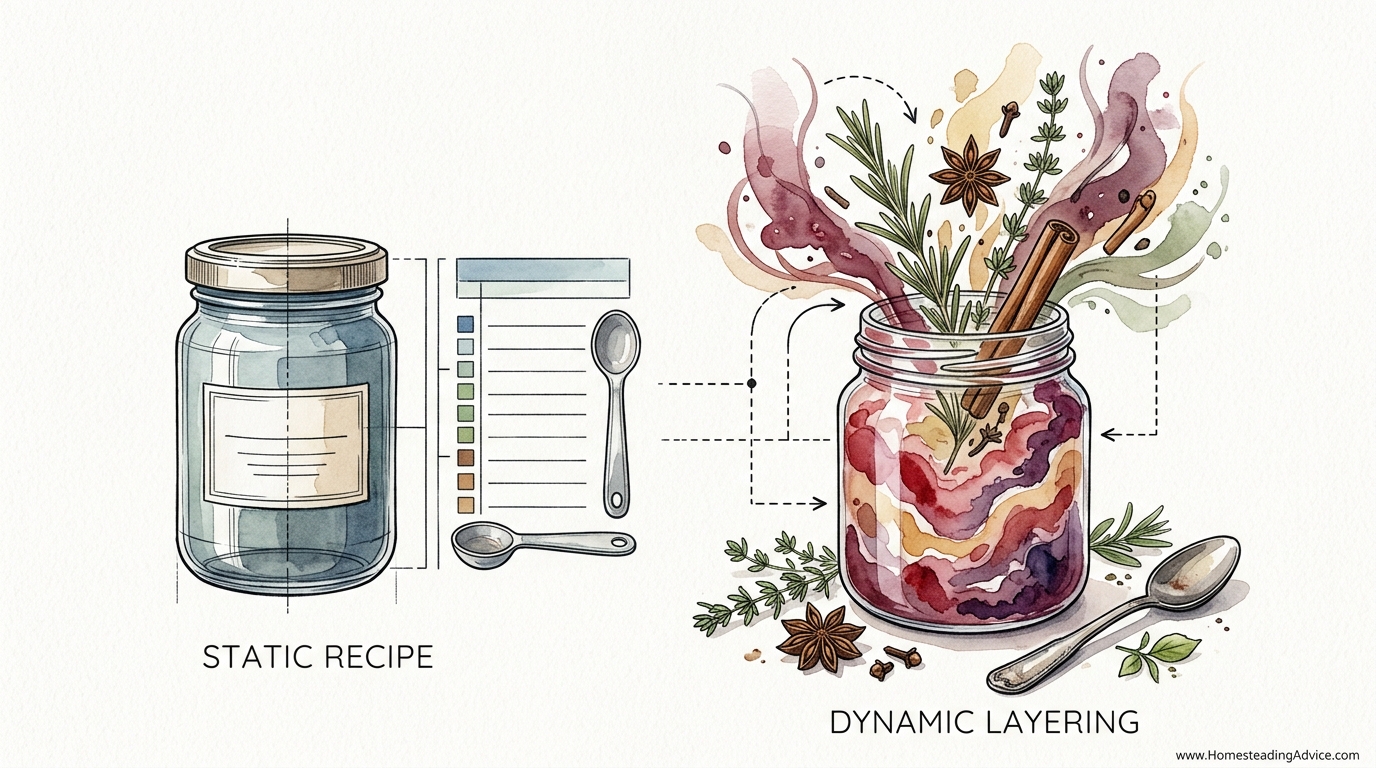
Is your pantry filled with one-dimensional sweetness, or is every jar a complex culinary story? Most home cooks follow a static recipe that results in nothing but sugar-flavored fruit. A dynamic preserver knows that adding black pepper, rosemary, or even wood smoke can elevate a humble preserve into a gourmet masterpiece. It’s time to move beyond the basic 1:1 sugar-to-fruit ratio.
When we talk about food preservation, we often focus solely on the shelf-life—the sturdy seal of a lid and the clear, jewel-toned jelly inside. But for those of us with a bit of pioneer grit, preservation is about more than just survival; it is about capturing the peak of a season and imbuing it with the wisdom of the spice cabinet. Our ancestors didn’t just boil fruit; they used what was on hand—wild herbs from the garden and precious spices from the trade routes—to turn basic sustenance into something legendary.
Learning how to flavor jam with herbs and spices is the bridge between being a “recipe-follower” and a “master preserver.” It requires an understanding of how aromatics interact with fruit acids, how heat unlocks essential oils, and how a single sprig of thyme can transform a cloying raspberry jam into a savory-sweet companion for a roast chicken or a sharp cheddar. This guide will walk you through the techniques, the safety precautions, and the bold flavor profiles that will change the way you look at your harvest forever.
How To Flavor Jam With Herbs And Spices
At its core, flavoring jam with herbs and spices is the practice of “dynamic layering.” While a static recipe treats sugar and fruit as the only players, layering introduces aromatics that work in the background, middle, and foreground of the palate. This isn’t just about throwing in a handful of cinnamon; it’s about choosing a specific vehicle—infusion, whole spice, or ground powder—to achieve a balanced result.
This technique exists because fruit, while delicious, is often high in sugar and acid but low in the complex “bass notes” that make a meal memorable. Spices like black pepper or star anise provide that depth, while herbs like basil or lavender provide “high notes” that brighten the natural floral qualities of the fruit. In a real-world kitchen, a spiced jam isn’t just for toast; it’s a glaze for meats, a filling for sophisticated pastries, or a centerpiece for a charcuterie board.
Think of the fruit as the canvas and the herbs and spices as the paint. A plain strawberry jam is a white sheet of paper. Adding balsamic vinegar provides a frame, and a crack of black pepper adds texture. When you learn to see preserves this way, you stop worrying about “getting it right” and start focusing on “building it true.”
The Methods of Infusion: Techniques for the Home Preserver
There are three primary ways to introduce aromatics into your jam, and each has its own effect on the final product’s clarity, intensity, and texture. Choosing the right method depends on whether you want a subtle hint of flavor or a bold, unmistakable punch.
1. The Sachet or “Bouquet Garni” Method
This is the most controlled way to add flavor. You place whole spices—such as cinnamon sticks, star anise, or cloves—into a small muslin bag or a stainless steel tea infuser. You drop the bag into the fruit and sugar mixture during the initial maceration or the early stages of the boil. This allows the heat to slowly draw out the volatile oils without leaving behind woody bits or “muddying” the color of the jam.
2. The Steep and Strain (Herbal Tea) Method
For delicate herbs like mint, lemon verbena, or chamomile, a direct boil can often turn the flavor bitter or “grassy.” Instead, you can make a concentrated “tea” by steeping the herbs in a small amount of the fruit juice or water before adding it to the pot. This method ensures that the bright, floral notes of the herb are captured while the physical leaves are discarded, preventing them from turning brown and unattractive in the jar.
3. Direct Integration (Ground Spices)
Adding ground spices—like cardamom, ginger, or nutmeg—directly to the pot creates a more integrated, intense flavor. However, ground spices can alter the clarity of the jam, making it appear slightly cloudy. The key here is to add them toward the end of the cooking process. High heat over a long period can actually dissipate the delicate aromas of ground spices, leaving you with the “heat” but none of the “scent.”
Benefits of Adding Aromatics to Your Preserves
Moving beyond plain fruit preserves offers several practical and culinary advantages that go far beyond just “tasting better.”
- Reduced Perception of Sweetness: Many modern palates find traditional 1:1 sugar-to-fruit jams too sweet. Adding “savory” or “earthy” spices like rosemary or sage provides a counterpoint that makes the jam taste more balanced and less like liquid candy.
- Versatility in Cooking: A spiced jam is a pantry powerhouse. A blackberry-thyme jam can be whisked into a vinaigrette or used as a glaze for pork chops, whereas a plain blackberry jam is mostly limited to breakfast applications.
- Preservation of Memory: Herbs and spices often carry strong nostalgic ties. Using lavender from your own garden or a specific blend of “winter spices” (clove, ginger, allspice) can turn a simple jar of apple butter into a seasonal tradition that anchors your family’s food culture.
- Health Benefits: Many spices, such as ginger and turmeric, contain anti-inflammatory compounds. While the amounts in a serving of jam are small, every bit of nutrient density added to your diet counts.
Challenges and Common Mistakes
The transition from static to dynamic preserving isn’t without its pitfalls. Most mistakes come from a lack of patience or an overestimation of how much flavor is needed.
Over-infusing “Woody” Spices: Whole cloves and star anise are incredibly powerful. If left in the pot for the entire duration of a long boil, they can overwhelm the fruit, leaving the jam tasting medicinal. Always taste your jam every 5 minutes after the 15-minute mark of boiling whole spices. If the flavor is where you want it, pull the sachet immediately.
The “Grassy” Herb Trap: Adding fresh basil or mint too early in the boil results in the chlorophyll breaking down, which turns the herbs a muddy brown and gives the jam a boiled-hay flavor. To keep herbs tasting fresh, either use the “Steep and Strain” method or add finely chiffonaded leaves in the final 60 seconds of the boil before jarring.
Clarity Issues: If you are aiming for a competition-grade, clear jelly, avoid ground spices. They act as particulate matter that will never fully dissolve, resulting in a cloudy product. For clear jellies, always use the infusion sachet method with whole spices.
Safety and Limitations
While adding dried spices is generally safe in home canning, there are firm boundaries you must respect to ensure your preserves remain shelf-stable. According to the National Center for Home Food Preservation, dried herbs and spices do not significantly change the pH of a high-acid fruit jam. However, fresh herbs are a different story.
Fresh herbs contain water and are low-acid ingredients. If you add massive amounts of fresh herbs—say, a cup of fresh basil to a quart of strawberry jam—you are essentially diluting the acidity of the fruit. This could potentially raise the pH level above the 4.6 safety threshold, creating an environment where Clostridium botulinum could thrive. A safe rule of thumb is to limit fresh herb additions to no more than 2 tablespoons (30ml) of finely chopped herbs per 4 cups (1 liter) of fruit, or stick to dried spices which carry no moisture risk.
Furthermore, some aromatics do not hold up well to the high heat of a water-bath canner. Delicate extracts, like pure vanilla or almond, should be added after the heat is turned off, just before the jam is ladled into jars, to prevent the flavor from evaporating during the boil.
Comparison: Ground vs. Whole Spices
The choice between ground and whole spices is one of the most important decisions a preserver makes. It affects everything from the final look to the intensity of the flavor.
| Factor | Whole Spices (Infused) | Ground Spices (Direct) |
|---|---|---|
| Clarity | High; jam remains clear and jewel-toned. | Low; jam will be cloudy or have “specks.” |
| Flavor Profile | Nuanced, floral, and aromatic. | Bold, intense, and earthy. |
| Ease of Use | Requires a bag/infuser and removal. | Simple; just stir in. |
| Shelf Life Flavor | Stays consistent over time. | Can intensify or “sharpen” in the jar. |
Practical Tips for Success
If you are ready to start experimenting, keep these best practices in mind to ensure your first batch of spiced jam is a success.
- Toast Your Whole Spices: Before putting cinnamon sticks or peppercorns in your infusion bag, give them a quick toast in a dry skillet over medium heat for 1–2 minutes. This “wakes up” the volatile oils and provides a much richer flavor.
- Use the “Rule of One”: When starting out, try adding only one herb or one spice to a single-fruit jam. Mastering the relationship between Strawberry and Basil is better than making a “Strawberry-Basil-Black-Pepper-Balsamic” mess that has no clear direction.
- The 5-Minute Rule: Most jams reach their “set point” at 220°F (104°C). If you are adding delicate herbs, add them in the final 5 minutes of cooking. This is long enough to sterilize them but short enough to preserve their bright color and flavor.
- Think in Categories: Pair “warming” spices (cinnamon, clove, nutmeg) with fall fruits like apples and pears. Pair “piquant” spices (black pepper, ginger, chili) with bright summer fruits like peaches and raspberries. Pair “woody” herbs (rosemary, thyme, sage) with dark, tannic fruits like blackberries and plums.
Advanced Considerations: Smoke and Spirit
For the serious practitioner, flavor layering goes beyond the spice cabinet. You can introduce complexity through unconventional means like wood smoke or alcohol infusions.
Cold-Smoking Fruit: Before you even start the jam, try cold-smoking your fruit (like peaches or plums) for 20–30 minutes using a mild wood like apple or cherry. This adds a “haunting” back-note of campfire that works beautifully in savory preserves. If you don’t have a smoker, a tiny pinch of high-quality smoked sea salt can provide a similar, albeit less complex, effect.
The “Spirit” Finish: Adding a splash of bourbon to peach jam or a bit of gin to a grapefruit marmalade can elevate the aromatic profile. Alcohol acts as a solvent, pulling more flavor out of the fruit and herbs. However, remember that the alcohol itself will largely boil off, leaving behind the “soul” of the liquor. Add spirits at the very end of the boil to retain as much of that aromatic character as possible.
Examples and Scenarios
Let’s look at how these theories translate into a real batch of jam. Imagine you have a bumper crop of 4 lbs (roughly 1.8 kg) of ripe peaches.
Scenario A: The “Static” Batch
You cook the peaches with 4 cups of sugar and a squeeze of lemon. The result is a delicious, bright peach jam that tastes like summer candy. It’s perfect for toast, but children are the only ones who get excited about it.
Scenario B: The “Dynamic” Batch
You macerate the peaches with the same sugar but add 1 tablespoon (15ml) of freshly grated ginger. During the boil, you drop in a sachet containing two sprigs of fresh rosemary and 1/2 teaspoon of whole black peppercorns. In the final minute, you stir in 1 teaspoon of vanilla bean paste. The result? A sophisticated “Peach-Ginger-Rosemary” preserve. The ginger provides a lingering warmth, the rosemary adds an earthy, pine-like aroma that cuts the sweetness, and the black pepper provides a tiny “spark” on the back of the tongue. This jam is now the star of a cheese plate featuring aged Gouda or a creamy Brie.
Final Thoughts
Moving from a static recipe to dynamic layering is a rite of passage for every home cook who values self-reliance and culinary skill. It requires us to slow down, to taste our work as it evolves, and to trust our instincts. When you learn how to flavor jam with herbs and spices, you aren’t just following a set of instructions; you are participating in an ancestral tradition of making the most of what the land provides.
Don’t be afraid to fail. A batch that is slightly too “lavender-heavy” is simply a lesson for the next season. The joy of the pioneer kitchen is in the experimentation—the constant tuning of flavors until you find the one that tastes like your home and your history. Start with a single sprig of thyme or a single star anise, and see where the path leads you.
Next time you find yourself standing over a bubbling pot of fruit, ask yourself: what is the story this jar is going to tell? With a bit of grit and a well-stocked spice cabinet, that story can be one of the best things you’ve ever tasted.