When you stop buying pork and start producing it, your relationship with the food chain changes forever. The ‘pork’ in the store is bred for industrial speed, not flavor or health. By sourcing a resilient heritage breeding pair, you aren’t just buying meat; you’re owning the entire supply chain. Discover how to select stock that thrives on your land and fills your larder for a fraction of the cost.
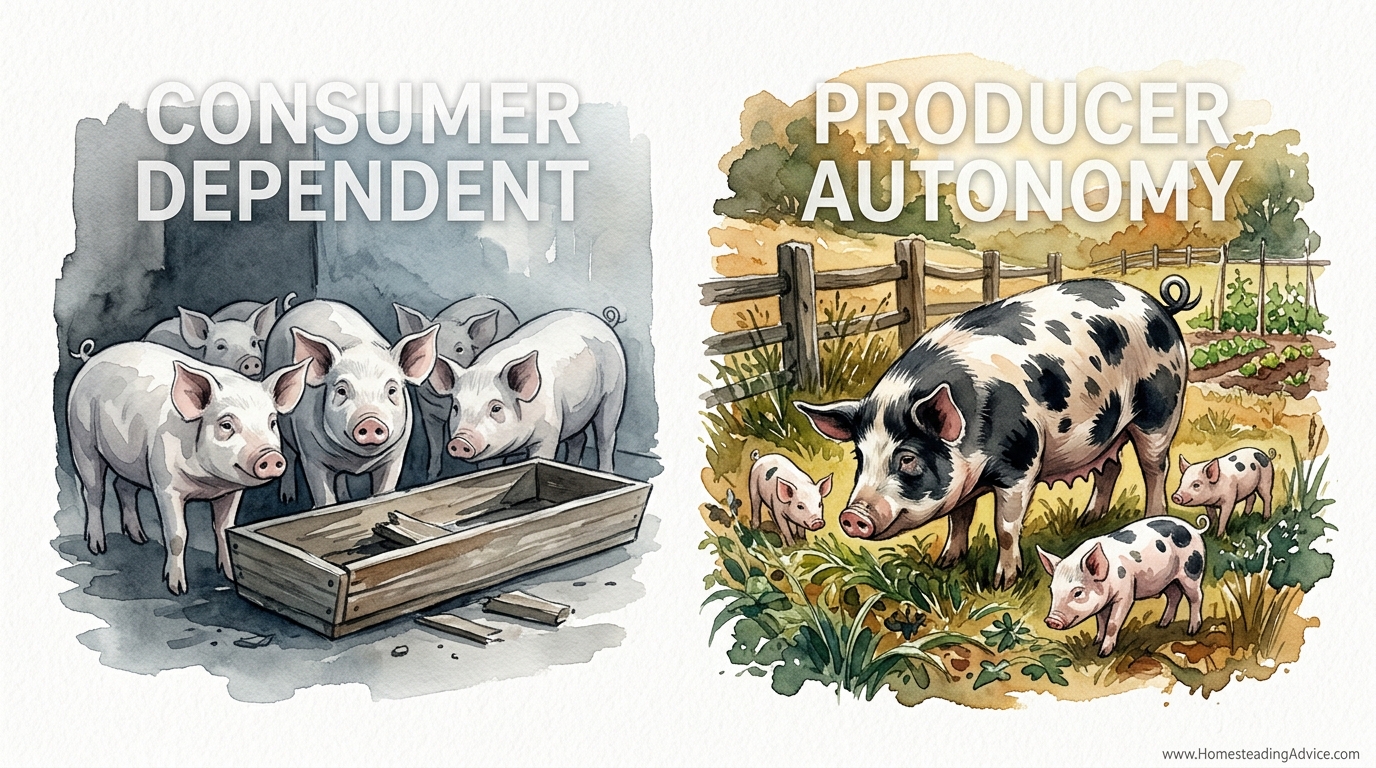
Taking control of your food supply requires a shift from consumer dependence to producer autonomy. Most commercial pork comes from white-skinned hybrids that require climate-controlled barns and high-protein soy rations to survive. Heritage pigs are different. These animals evolved alongside humans for centuries, thriving in woods and pastures while converting fallen fruit and roots into nutrient-dense protein.
Owning a breeding pair allows you to produce a self-replenishing supply of high-quality fat and meat. This journey begins with understanding the biology and needs of these ancestral breeds. You will learn to manage their cycles, build their homes, and eventually reap the rewards of a truly independent larder.
Heritage Pig Breeding For Beginners
Heritage pig breeding involves raising traditional livestock breeds that existed before the rise of industrial agriculture. These breeds are defined by their hardiness, distinctive flavor, and ability to thrive in outdoor environments. Unlike modern commercial hogs, which are often lean and fragile, heritage breeds carry more intramuscular fat and possess strong mothering instincts.
Many of these breeds were near extinction just a few decades ago. Organizations like the Livestock Conservancy track these populations to ensure genetic diversity remains available to small-scale producers. Farmers choose heritage stock today because these animals can forage for a significant portion of their diet and resist many common diseases that plague indoor operations.
Examples of these breeds include the Tamworth, known for its athletic foraging in forests, and the Berkshire, prized for its deep red, marbled meat. The Large Black is another favorite for beginners due to its docile nature and large, lop ears that protect its eyes while rooting. These animals act as “biological tractors,” clearing brush and tilling soil while growing into a valuable resource for your family.
How the Breeding Cycle Works
Starting a breeding program requires a solid understanding of the porcine reproductive cycle. A female pig, called a gilt before she has her first litter and a sow afterward, typically reaches breeding age between 7 and 9 months. Male pigs, known as boars, are generally ready to work at a similar age.
The Heat Cycle and Breeding
Sows go into heat every 21 days throughout the year. You will notice physical signs like a swollen vulva and a change in behavior, often becoming more vocal or seeking attention. Experienced breeders look for “standing heat,” where the sow will stand perfectly still when pressure is applied to her back, signaling she is ready for the boar.
Gestation and Preparation
The standard gestation period for a pig is 3 months, 3 weeks, and 3 days, or roughly 114 days. During this time, the sow needs a steady diet of high-quality forage and supplemental grain to support the developing litter. Providing a clean, dry environment is crucial as she approaches her due date.
Farrowing (Giving Birth)
Approximately 5 to 7 days before the due date, the sow should be moved to a dedicated farrowing area. Most heritage sows prefer a private space where they can build a nest. You will see her gathering straw and digging a shallow depression to protect her piglets. Heritage breeds are excellent mothers and rarely need human intervention during the birth of 6 to 12 piglets.
Benefits of Raising Heritage Stock
Choosing heritage breeds offers practical advantages that industrial pigs cannot match. The most immediate benefit is the quality of the meat. Heritage pork is darker, juicier, and carries a flavor profile influenced by the pig’s diet of acorns, pasture, and diverse forage.
Nutritional density is another significant factor. Research indicates that pasture-raised pork contains significantly higher levels of Omega-3 fatty acids and Vitamin E compared to factory-raised alternatives. These healthy fats are concentrated in the lard, which becomes a versatile and shelf-stable cooking medium for the self-reliant kitchen.
Beyond the larder, these pigs provide valuable land management services. They excel at clearing overgrown woodlots and preparing garden beds by rooting out invasive weeds and grubs. This natural behavior reduces the need for heavy machinery and expensive herbicides, making your land more productive over time.
Challenges and Common Mistakes
Raising pigs is rewarding, but it presents unique hurdles for the unprepared. Fencing failures are the most frequent mistake beginners make. Pigs are incredibly strong and intelligent; if they find a weak spot in a fence, they will exploit it. Woven wire fencing with a single strand of electric wire at “nose height” is usually the best way to keep them contained.
Another common pitfall is overfeeding. Certain heritage breeds, like the American Guinea Hog or the Mangalitsa, are “lard breeds” that put on fat very easily. Feeding them too much grain can lead to obesity, which causes health problems and reduces fertility in breeding sows. You must balance their supplemental feed with the amount of forage available on your land.
Ignoring water needs can lead to disaster during hot months. Pigs do not sweat and rely on shade and mud wallows to regulate their body temperature. Failing to provide a constant source of fresh water and a cool place to rest can lead to heat stroke. Always ensure their water troughs are heavy enough that they cannot be tipped over.
Limitations and Practical Constraints
Heritage pig breeding is not ideal for every environment. Small suburban lots often lack the space required for rotational grazing. Pigs need room to move; otherwise, they will quickly turn a small paddock into a muddy wasteland. A minimum of 1/4 acre (0.1 hectares) per pig is often recommended for sustainable pasture management.
Climate also plays a role in breed selection. While most heritage pigs are hardy, white-skinned breeds like the Yorkshire can suffer from sunburn in intense tropical sun. Conversely, extremely lean breeds may struggle in harsh northern winters without significant supplemental bedding and high-calorie feed.
Local infrastructure is a final constraint to consider. Before you start breeding, identify a local processor who handles heritage hogs. Some commercial butchers are not equipped to handle the extra fat or specific carcass sizes of older breeds. If you plan to sell meat, you must also navigate USDA or regional regulations regarding slaughter and labeling.
Comparison of Popular Heritage Breeds
Selecting the right breed depends on your specific land and goals. Use the following table to compare common options based on temperament, growth, and foraging ability.
| Breed | Temperament | Primary Use | Foraging Ability | Growth Rate |
|---|---|---|---|---|
| Tamworth | Active / Alert | Bacon / Lean Meat | Exceptional | Moderate |
| Berkshire | Docile | Premium Marbled Pork | Good | Fast |
| Large Black | Very Docile | Pork and Lard | Excellent | Moderate |
| Old Spots | Gentle | Orchard Foraging | Excellent | Moderate |
| Hereford | Friendly | Meat Production | Fair | Fast |
Practical Tips for Success
Preparation is the key to a stress-free breeding season. Start by building a movable farrowing hut. A classic A-frame design using 8-foot (2.4-meter) boards provides a safe space where the sow can lie down without accidentally crushing her piglets against the walls. The slanted sides create “escape zones” for the young.
Implement a rotational grazing system to keep your land healthy. Dividing your acreage into smaller paddocks allows the pigs to graze one area intensely before moving to fresh ground. This practice breaks the parasite cycle and gives the grass time to recover. Electric fencing is highly effective for these internal divisions once the pigs are trained to it.
Keep meticulous records of breeding dates and litter sizes. This data helps you identify which sows are the most productive and which boars produce the healthiest offspring. Selecting the best piglets to keep as future breeding stock ensures your herd’s genetics improve with every generation.
Advanced Breeding Considerations
Experienced producers often explore crossbreeding to achieve “hybrid vigor.” Crossing a Tamworth sow with a Berkshire boar can produce piglets that have the hardiness and foraging skill of the mother combined with the superior meat quality of the father. This technique, known as heterosis, often results in faster growth and better disease resistance.
Winter management requires extra attention in cold climates. While heritage pigs grow a thick winter coat, they still need deep bedding like straw or wood shavings to stay warm. Increasing their calorie intake by 15% to 20% during freezing weather helps them maintain their body weight and pregnancy.
Lard rendering is an advanced skill that maximizes the value of your heritage stock. Unlike industrial lard, heritage lard is high in Vitamin D and has a clean, neutral flavor. Mastering the art of rendering “leaf fat” from around the kidneys provides you with the finest pastry shortening available, further closing the loop on your self-reliant food system.
Economic Scenario: Raising a Small Herd
Understanding the costs helps you plan for long-term sustainability. Suppose you start with a breeding pair of Large Black pigs on a 2-acre (0.8-hectare) plot.
Initial investments often include:
- Breeding Pair: $1,000 – $2,500 for registered stock.
- Fencing: $500 – $1,200 depending on the perimeter size.
- Shelter: $200 – $400 for a DIY A-frame hut.
Ongoing costs involve supplemental grain, which might average 4 to 6 lbs (1.8 to 2.7 kg) per day per adult during months when pasture is low. A single sow can produce two litters per year, totaling 12 to 18 piglets. Selling half of these as “feeder pigs” to other homesteaders for $100 – $150 each can quickly cover your annual feed and maintenance costs. The remaining piglets go into your freezer, providing hundreds of pounds of meat for the price of processing.
Final Thoughts
Producing your own pork is a fundamental step toward household resilience. Heritage pigs offer the perfect entry point because they are designed by nature to work with the land rather than against it. These animals transform simple resources like grass, sunshine, and fallen fruit into the highest quality protein imaginable.
Success in this endeavor requires patience and a willingness to learn from the animals themselves. You will discover that every breed has a personality and every sow has a unique way of caring for her young. This connection to the cycle of life provides a level of security that no grocery store can offer.
Experimenting with different forage crops and management styles will help you fine-tune a system that works for your specific acreage. Whether you are motivated by flavor, nutrition, or independence, heritage pig breeding remains one of the most practical and rewarding skills for the modern producer. Stay observant, keep your fences tight, and enjoy the journey of reclaiming your food chain.