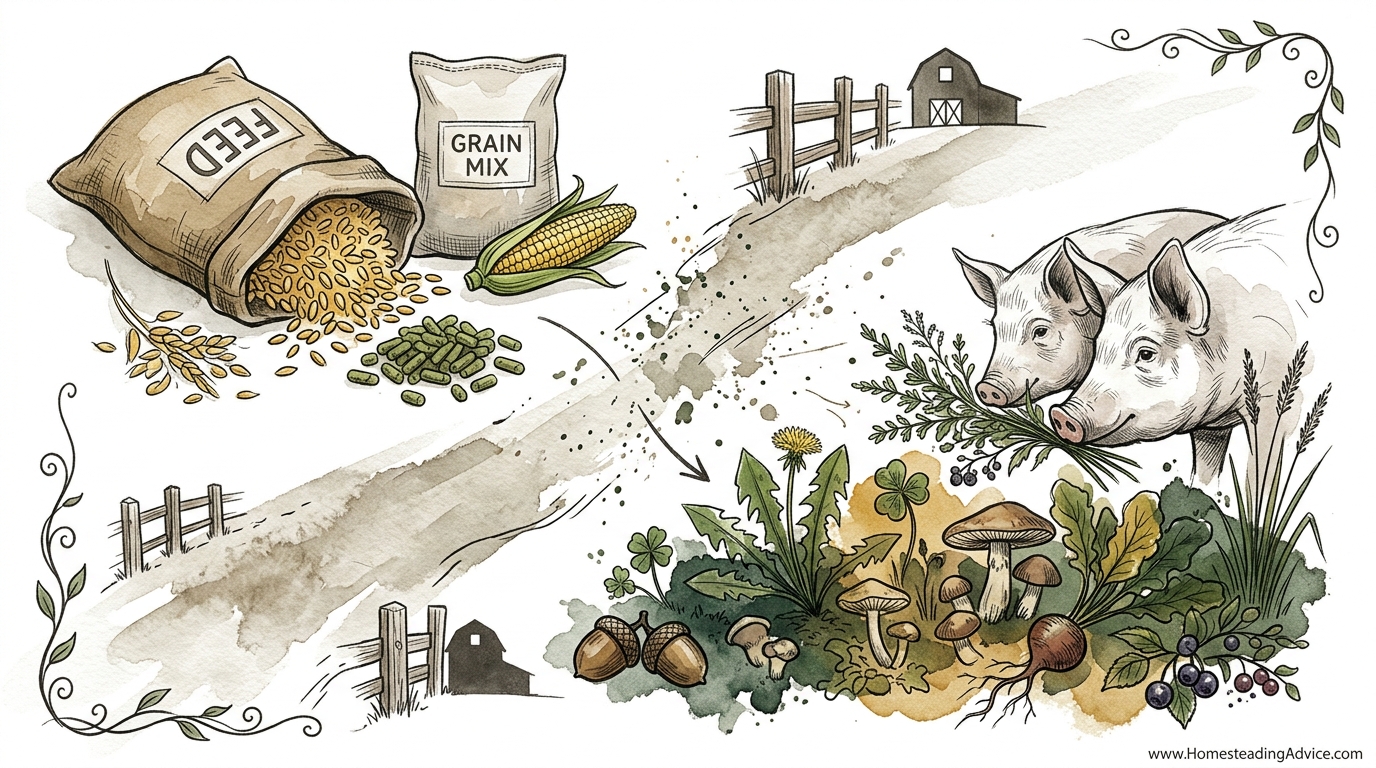
The secret to the world’s most expensive ham isn’t found in a grain bag; it’s buried under the leaves in your own woods. Are you a consumer of industrial soy-based feed, or a producer of high-quality pastured pork? By shifting your focus from the forest floor to the feed store, you can slash your overhead to nearly zero while producing meat with a flavor profile that commercial operations can never replicate.
Transitioning from a conventional barn-raised system to a forest-based model requires a fundamental shift in how you view both your livestock and your landscape. Most modern swine are bred to thrive in climate-controlled environments on a steady diet of ground corn and toasted soybean meal. These animals are efficient converters in a factory setting, but they often lack the hardiness and instincts required to navigate a living, breathing ecosystem. True self-reliance comes from matching the right genetics with a deep understanding of the natural cycles of the timber.
Harvesting meat from the woods is an ancient tradition that predates modern agricultural science. Medieval farmers across Europe practiced “pannage,” the right to turn pigs out into the forest during the autumn “mast” season. This seasonal glut of acorns, beech nuts, and chestnuts provided the calorie-dense fuel needed to carry the herd through the winter. Reclaiming this ancestral wisdom allows you to produce a product that is not only more ethical and sustainable but also possesses a complex, nutty fat profile that fetches a significant premium in niche markets.
Pasture Raised Pig Feeding Guide
Pasture-raised pig feeding is a management system where livestock obtain a substantial portion of their nutritional requirements from living plants, roots, insects, and tree fruits within a controlled grazing area. Unlike “free-range,” which often simply means the animals have a door to an outdoor lot, a true pasture or woodland system integrates the animal’s biology with the land’s ecology. This approach exists to reduce the economic burden of purchased feed while simultaneously improving the health of the animal and the quality of the soil.
In real-world situations, this guide serves as a roadmap for the small-scale farmer or homesteader who wants to maximize the productivity of “marginal” land. Timber that is too steep for a tractor or too rocky for a plow is the ideal habitat for a pig. These animals function as biological tractors, clearing underbrush, aerating soil, and consuming pests that might otherwise damage the trees. Think of the pig as a multi-functional tool: a recycler of waste, a tilling machine, and a high-value protein source all in one package.
Visualize a standard commercial pig as a high-performance race car that requires specific synthetic fuel to run. In contrast, a heritage breed on pasture is like a rugged, multi-fuel utility vehicle. It can run on whatever the environment provides, from fallen apples and overripe squash to the deep roots of a dandelion. This flexibility is the cornerstone of a resilient farm. Successful management hinges on your ability to observe the land and determine when the “fuel” is abundant and when you must provide a supplemental bridge to maintain growth.
The Mechanics of the Forest Floor: How It Works
Success in woodland feeding starts with understanding the “mast” cycle. Trees like oaks, hickories, and beeches do not produce the same amount of fruit every year. Mast years are seasonal events where the forest floor is literally carpeted with nuts. During these periods, a pig can consume between 7 kg and 8 kg (15 to 18 lbs) of acorns per day. This high-fat, high-carbohydrate intake is what creates the legendary marbling found in premium hams.
Implementation of this system requires a rotational grazing strategy. Leaving pigs in the same woodlot for the entire season will result in soil compaction and the destruction of the very trees you are trying to utilize. You should divide your acreage into smaller paddocks using portable electric fencing. Pigs are highly intelligent and learn to respect a single strand of energized wire within hours. By moving the herd every 7 to 14 days, you ensure they always have access to fresh forage while giving the previously grazed area time to recover and regrow.
Rooting behavior is another mechanical aspect you must manage. Pigs use their powerful snouts to dig for grubs, tubers, and minerals buried 15 cm to 30 cm (6 to 12 inches) below the surface. While this is excellent for clearing invasive brush, it can damage the roots of shallow-seeded trees like maples. To manage this, you can use “nose rings” in certain environments, though many regenerative farmers prefer to use “impact timing” instead. This involves high-intensity grazing for a very short duration, followed by a long rest period for the land.
Benefits of Woodland and Pasture Feeding
Practical and measurable benefits begin with the reduction of feed costs. Grain can account for up to 70% of the total cost of raising a pig to market weight. In a well-managed silvopasture system—which combines trees and livestock—purchased feed requirements can drop by 40% to 60% during the peak mast and forage seasons. This creates a massive competitive advantage for the independent producer.
Observable health improvements in the livestock are also significant. Pastured pigs have lower stress levels, stronger immune systems, and fewer respiratory issues than those raised in confinement. The sunlight provides essential Vitamin D, and the varied diet ensures a wider range of micronutrients. Furthermore, the meat itself is nutritionally superior. Research indicates that forest-raised pork contains higher levels of monounsaturated fats (the “heart-healthy” fats found in olive oil) and a more favorable omega-6 to omega-3 ratio compared to corn-fed counterparts.
Environmental benefits should not be overlooked. Pigs integrated into a forest system help cycle nutrients. Their manure provides a slow-release fertilizer for the timber, which can increase the growth rate and health of the trees over time. They also control the larvae of pests like the sawfly or various weevils that can decimate a nut crop. This creates a closed-loop system where the presence of the animal improves the habitat for the next generation of both tree and pig.
Challenges and Common Mistakes
One of the most frequent errors is overstocking. It is easy to look at a lush forest and assume it can support dozens of pigs. However, the carrying capacity of a woodlot is much lower than an irrigated clover pasture. A general rule of thumb is 1 to 2 pigs per acre for long-term woodland management, though this can be higher (up to 10 per acre) during a heavy mast year for a short duration. Overstocking leads to “moonscaping,” where the pigs strip the land of all vegetation, leading to erosion and the death of the trees.
Fencing failures represent another common pitfall. Pigs are notorious for being “ground-out” experts. They will root dirt over the bottom wire of an electric fence, shorting it out and allowing the whole herd to escape. Constant monitoring is required. You must walk the fence line regularly to ensure no debris or soil has compromised the circuit. Additionally, always train your pigs to electric fencing in a secure, hard-fenced area before releasing them into the expansive woods.
Misunderstanding the protein requirements of a growing pig is a nutritional mistake that stunts growth. While acorns and chestnuts are high in energy, they are relatively low in protein—usually around 6% to 8%. A growing pig (weaner to grower stage) requires between 14% and 16% protein to build muscle. Relying solely on the forest floor during the early growth stages will result in “runt” pigs that put on fat but little meat. You must provide a high-protein supplement, such as peas, alfalfa, or a small amount of soy, to bridge this gap.
Limitations and Environmental Constraints
Environmental limitations are often dictated by the weather. In extremely wet seasons, the soil in a woodlot becomes vulnerable to “pugging.” This occurs when the pigs’ hooves and rooting behavior turn the soft ground into a deep mud slurry. This can kill the delicate mycorrhizal fungi in the soil that trees depend on for nutrient uptake. In these conditions, you must have a “sacrifice lot”—a well-drained area where the pigs can be held until the forest floor dries out.
Geographic boundaries also play a role. Certain regions lack the tree density or species diversity required to sustain a pig through the winter. If your land consists primarily of conifers like pine or cedar, there will be very little for a pig to eat. Pigs cannot digest the needles or bark of evergreen trees efficiently. This method works best in deciduous forests dominated by Oak (Quercus), Beech (Fagus), Hickory (Carya), and Chestnut (Castanea) species.
Time is the ultimate constraint. Raising a pig on pasture and wild harvest takes longer than the industrial model. A CAFO (Concentrated Animal Feeding Operation) pig reaches market weight in about 5 to 6 months. A heritage breed finished on mast and forage may take 8 to 12 months. This requires more patience and a higher investment of labor per animal. If your business model depends on high-volume, rapid-turnover production, the woodland system may not be the ideal fit.
Feed Bags vs. Wild Harvest: A Comparison
| Factor | Industrial Feed (Bags) | Wild Harvest (Forest) |
|---|---|---|
| Direct Cost | High ($300-$500 per pig) | Low ($50-$150 per pig) |
| Growth Rate | Rapid (5-6 months) | Slow (8-12 months) |
| Flavor Profile | Mild, consistent, bland | Complex, nutty, rich |
| Management | Low; automated systems | High; rotation & fencing |
| Animal Health | High parasite/respiratory risk | Low risk; natural immunity |
Practical Tips for Success
Start with the right genetics. Avoid the pink “Yorkshire” or “Landrace” pigs common in commercial barns; their skin is too sensitive for the brush and they lack the foraging drive. Look for heritage breeds like the Tamworth, Berkshire, Large Black, or the Gloucestershire Old Spot. These breeds were specifically developed for outdoor life. The Tamworth, in particular, is often called the “forest pig” due to its long snout and active foraging nature.
Water is the most critical nutrient. A pig can go days without food, but only hours without water, especially in the summer. Install a portable watering system that can be moved with the fencing. Using 100-meter (330-foot) lengths of flexible HDPE pipe allows you to pull water from a central well to your various paddocks. Ensure the water is kept in the shade, as pigs will refuse to drink hot water, leading to heat stress and reduced feed intake.
Timing your harvest is an art form. The best-tasting pork comes from animals that have been “finished” on a specific crop. In the 60 days leading up to slaughter, increase the access to acorns or chestnuts. This specific window is when the fat composition changes most drastically. If the mast crop fails, you can simulate this finish by feeding windfall apples, pumpkins, or even surplus milk from a local dairy.
Advanced Considerations for Serious Practitioners
Professional graziers often implement a multi-species system to maximize efficiency. Cows or sheep are brought through a pasture first to eat the tall grasses. Pigs follow several days later to handle the “weedy” species and root out the parasites that might affect the ruminants. This sanitation effect reduces the need for chemical dewormers. Furthermore, the pigs will consume the “over-mature” forage that cows find unpalatable, converting it into high-value manure.
Managing the “tannin load” is another advanced skill. Acorns contain high levels of tannins, which can be bitter and, in massive quantities, mildly toxic to some animals. Pigs have specialized saliva that binds to tannins, neutralizing them. However, green acorns (those that fall early in the season) have much higher tannin levels than brown, ripe ones. Serious producers often wait until the first heavy frost before allowing pigs full access to the oak groves, as the cold helps convert some of the starches and mellows the tannins.
Soil monitoring becomes essential as you scale up. Use a penetrometer to measure soil compaction at various depths in your woodlots. If you find the soil is becoming too hard, it indicates that the pigs have been in that area too long. Conversely, if the soil is too loose and erosion is starting, you must seed a “cover crop” of rye or clover immediately after moving the pigs out. This stabilizes the soil and provides a high-protein snack for the pigs when they return to that paddock in the next rotation.
Toxic Plants: Hazards of the Woods
Understanding what a pig cannot eat is just as important as knowing what they can. While pigs are remarkably resilient, certain plants can be fatal or cause significant health issues. Bracken Fern is a common forest inhabitant that contains thiaminase, an enzyme that destroys Vitamin B1 (thiamine). If pigs consume large quantities over several weeks, they can develop neurological issues or heart failure. Always ensure there is enough alternative forage so they aren’t forced to eat the fern.
Nightshades, including Jimsonweed and Hemlock, are highly toxic. These plants often grow along the edges of woods or in disturbed soil where pigs have previously rooted. Hemlock contains alkaloids that can paralyze the respiratory system within hours of ingestion. Cocklebur is another danger, particularly the young seedlings which contain carboxyatractyloside. This toxin attacks the liver and can kill a pig in less than 48 hours.
Acorns themselves require a cautionary note. While ripe brown acorns are the gold standard of feed, green acorns and the leaves of certain oak species can be toxic in extreme quantities. This is particularly true for young piglets or pregnant sows. High concentrations of gallotannins can cause kidney damage and gastrointestinal distress. Always observe your herd when they first enter a new oak-heavy paddock; if they show signs of lethargy or dark urine, move them to a grass-based pasture immediately.
Examples of a Successful Cycle
Consider the case of a 5-acre (2-hectare) woodlot consisting of mature White Oak and Shagbark Hickory. In a “mast year,” this acreage could potentially produce 2,500 kg (5,500 lbs) of nuts. A group of ten 50-kg (110-lb) pigs is introduced in mid-September. They are moved through five 1-acre paddocks. By the time they reach the final paddock in November, they have gained an average of 0.5 kg (1.1 lbs) per day with zero supplemental grain.
During this period, the farmer only provides a daily mineral lick and fresh water. The total cost of gain for those two months is effectively $0, excluding the initial purchase of the pigs and the amortized cost of the fencing. When these pigs are harvested in December, the fat is translucent and has a melting point significantly lower than standard pork. This quality allows the farmer to sell the meat at $15 per kg ($7 per lb) to local chefs, whereas the commodity price might be less than $2 per kg.
Another scenario involves using pigs to clear a neglected orchard. The pigs consume the “drops”—fruit that has fallen and would otherwise attract pests like the Mediterranean fruit fly. By consuming the fermented fruit and the larvae within, the pigs break the pest cycle for the following year. The sugars in the apples provide a rapid energy boost, which, when combined with the protein from the insects they root up, creates a balanced diet that requires very little intervention from the farmer.
Final Thoughts
Mastering the art of pasture and woodland pig feeding is a journey toward true agricultural independence. By aligning your production with the natural rhythms of the forest, you move away from the volatile prices of the grain market and toward a more stable, self-reliant model. The quality of the meat produced in these systems is a testament to the fact that nature’s design is often superior to human engineering.
The relationship between the pig and the oak tree is one of the oldest partnerships in human history. Re-establishing this link on your own land requires observation, patience, and a willingness to step away from the convenience of the feed bag. While the learning curve can be steep, the rewards—lower costs, healthier land, and a product of unparalleled quality—are well worth the effort.
Start small, choose the right heritage breeds, and keep a close eye on your soil health. Experiment with different tree species and supplemental forages to find what works best in your specific climate. Every forest is unique, and every herd will teach you something new about the land they inhabit. Applied wisdom and a bit of grit will transform your woods into a productive powerhouse that feeds both your family and your community for generations.