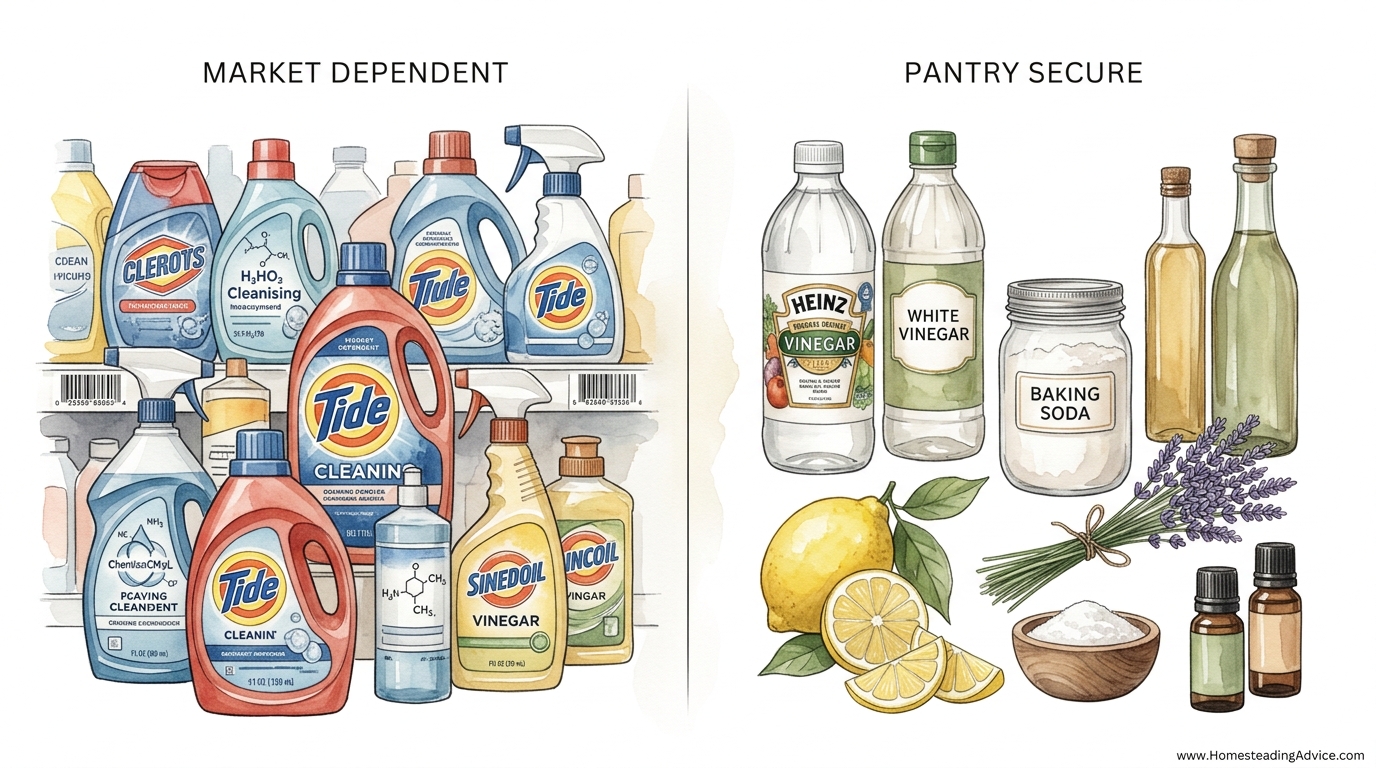
If the trucks stop running tomorrow, most homes would be out of ‘cleaners’ in a week, yet these four simple ingredients can clean 99% of any mess known to man. The ‘specialty cleaner’ industry wants you to believe you need a different chemical for your glass, your floors, and your toilet. We’re stripping it back to the basics that never expire and never fail, giving you total cleaning independence.
In a world where aisles are packed with neon-colored liquids and synthetic “spring breeze” scents, we have lost touch with the elementary chemistry of a clean home. Our ancestors didn’t have 15 different plastic bottles under their sinks. They relied on a deep understanding of acids, bases, and surfactants. This knowledge wasn’t just about tidiness; it was about health, longevity, and survival.
Taking control of your cleaning supplies is the first step toward a pantry-secure lifestyle. When you stop relying on complex supply chains for basic hygiene, you reclaim a piece of your autonomy. These solutions aren’t just “eco-friendly” alternatives; they are often more effective than their chemical counterparts because they don’t rely on fillers or artificial fragrances to mask a lack of performance.
How To Build A DIY Natural Cleaning Kit
Building a DIY natural cleaning kit is about consolidating your resources into a handful of versatile, powerful ingredients. Instead of a cabinet full of specialized toxins, you only need four pillars: distilled white vinegar, baking soda (sodium bicarbonate), liquid castile soap, and hydrogen peroxide.
These ingredients exist at the crossroads of science and tradition. White vinegar, an acetic acid, has been used since ancient times—specifically by the Babylonians and Egyptians—for its preservative and antimicrobial properties. Baking soda is a mild alkali that acts as both a deodorizer and a gentle abrasive. Castile soap, traditionally made from olive oil, provides the “slip” or surfactant action needed to lift dirt. Finally, hydrogen peroxide acts as a safe, oxygen-based whitener and disinfectant.
You use this kit by combining these bases in different ratios to target specific types of grime. For example, acids like vinegar are perfect for breaking down mineral deposits and hard water stains. Bases like baking soda are ideal for cutting through grease and organic matter. When you understand the “why” behind the ingredients, you no longer need a recipe book; you simply need to assess the mess and apply the correct chemistry.
The Essential Four: Deep Dive into the Ingredients
To truly build independence, you must understand your tools. Each of these four ingredients has a specific shelf life and a unique chemical profile.
1. Distilled White Vinegar (Acetic Acid): This is your primary acid. It typically has a 5% acidity level. It is produced through the fermentation of grain alcohol into acetic acid. It never truly expires, making it the ultimate “prep” item. It is a powerful descaler, meaning it dissolves the calcium and lime that build up in kettles, showerheads, and coffee makers.
2. Baking Soda (Sodium Bicarbonate): This is a mineral-based powder that is alkaline (pH 8-9). It is mined from trona ore or produced through a chemical process involving salt and limestone. It is non-toxic and safe for food surfaces. Its primary job is to neutralize odors and provide a mechanical “scrub” that won’t scratch most surfaces.
3. Liquid Castile Soap: Unlike modern “detergents” which are petroleum-based, castile soap is a true soap made from vegetable oils. It is a surfactant, which means it reduces the surface tension of water, allowing it to grab onto oil and dirt so they can be rinsed away. It is highly concentrated; a single 32 oz (946 ml) bottle can last a family several months when diluted properly.
4. Hydrogen Peroxide (3% Concentration): This is “water with an extra oxygen atom” (H2O2). It is a powerful oxidizer. In the cleaning world, it acts as a mild bleach alternative. It is excellent for sanitizing cutting boards, whitening grout, and removing organic stains like blood or grass. Note that it is light-sensitive and must be kept in its original brown bottle to remain effective.
How It Works: The Chemistry of the Clean
Cleaning is essentially a series of chemical reactions. Most dirt is either acidic or basic, and most cleaners are designed to neutralize that dirt or physically lift it.
Acids vs. Bases
The pH scale runs from 0 (very acidic) to 14 (very alkaline). Pure water is a 7.
- Vinegar (pH ~2.5): Works by dissolving alkaline substances. This is why it works so well on soap scum (which is alkaline) and hard water minerals.
- Baking Soda (pH ~9): Works by neutralizing acidic odors and breaking down fats and proteins. It also creates a “buffer” that helps other cleaners work more effectively.
The Surfactant Action
Castile soap works differently. Its molecules have two ends: one that loves water (hydrophilic) and one that loves oil (hydrophobic). When you spray a soap solution on a greasy stovetop, the “oil-loving” ends attach to the grease, and the “water-loving” ends attach to the water you’re using to wipe. This allows the grease to be suspended in the water and wiped away.
The Oxidation Process
Hydrogen peroxide cleans through oxidation. It releases oxygen when it touches an enzyme called catalase (found in most bacteria and organic stains). This reaction physically destroys the cell walls of bacteria and breaks the chemical bonds that give stains their color. This is why peroxide “fizzes” when applied to a cut or a stain—it is literally a microscopic explosion of cleaning power.
Benefits of the DIY Approach
Choosing natural ingredients over commercial specialty cleaners provides measurable benefits for your health, your wallet, and your home’s longevity.
Health and Respiratory Safety
Approximately one out of every three commercial cleaning products contains chemicals linked to asthma, reproductive disorders, or cancer. For those with respiratory sensitivities, the “clean” smell of a house is often actually the smell of volatile organic compounds (VOCs). DIY ingredients like vinegar and baking soda do not off-gas toxic fumes, making them significantly safer for children, pets, and the elderly.
Significant Cost Savings
A gallon (3.8 liters) of white vinegar costs a fraction of a single bottle of specialized glass cleaner. When you stop paying for the plastic packaging, the marketing, and the water (which makes up 90% of most commercial cleaners), your cleaning budget drops by nearly 80%. You are paying for the active chemistry, not the brand name.
Surface Longevity
Harsh chemical cleaners can eventually etch surfaces, yellow plastics, and degrade the finish on wood. Natural ingredients, when used correctly, are gentler on the materials in your home. This means your appliances, countertops, and floors will last longer, reducing the need for expensive repairs or replacements.
Challenges and Common Mistakes
The biggest mistake beginners make is believing that “more is better” or that mixing everything together creates a “super cleaner.” In reality, improper mixing can lead to ineffective solutions or even dangerous gases.
The Baking Soda and Vinegar Myth
We have all seen the elementary school volcano: you mix vinegar and baking soda, and it fizzes violently. While this looks like “cleaning power,” the chemical reality is that the acid (vinegar) and the base (baking soda) are neutralizing each other. The result is mostly water, carbon dioxide gas, and a little bit of sodium acetate (a salt).
While the mechanical action of the fizzing can help physically dislodge grime in a drain, using them mixed together in a spray bottle is a waste of ingredients. For the best results, use them sequentially: scrub with baking soda first, then rinse with vinegar to dissolve the residue.
Surface Damage
Because vinegar and lemons are acidic, they should never be used on natural stone like marble, granite, or limestone. The acid will “etch” the stone, creating dull spots that can only be removed by professional polishing. For these surfaces, always use a pH-neutral cleaner like diluted castile soap.
Limitations: When Natural May Not Be Ideal
While these ingredients can handle 99% of household messes, there are specific situations where they are not the best tool for the job.
Deep Disinfection
Natural cleaners are excellent for “cleaning”—which means the physical removal of dirt and germs. However, if you are dealing with a highly contagious virus or a severe bacterial outbreak (like C. diff), white vinegar may not be powerful enough to achieve 99.9% sterilization. In these rare cases, the CDC recommends specific EPA-registered disinfectants or a very precise bleach-to-water ratio.
Severe Mold Infestations
Vinegar can kill many species of surface mold, but it cannot penetrate porous materials like drywall or wood to reach the “roots” of a deep mold infestation. If you have structural mold or a large-scale infestation caused by flooding, natural DIY solutions should be a secondary measure after professional remediation.
Practical Tips for Success
To make your DIY cleaning kit as effective as possible, follow these best practices derived from years of household trial and error.
- Use Distilled Water: When mixing your spray bottles, use distilled or filtered water. Tap water contains minerals that can cause streaks on glass or interfere with the soap’s ability to suds up.
- Label Everything: Because many of these solutions are clear, it is easy to mix up your vinegar spray with your peroxide spray. Use a permanent marker to label the bottle and include the date it was mixed.
- Mix Small Batches: Because DIY cleaners lack chemical preservatives, water-based mixtures can eventually grow bacteria. Aim to use up a spray bottle within 2 to 4 weeks. For “pantry security,” keep the ingredients dry or concentrated and only mix them when needed.
- The 10-Minute Rule: Natural cleaners often need “dwell time.” Unlike harsh solvents that work instantly, a vinegar solution works best if you spray it on a surface and let it sit for 5 to 10 minutes before wiping. This gives the acid time to break down the mineral bonds.
The Master Recipe List
Keep these ratios in mind as you build your cleaning independence. All measurements are provided in both imperial and metric for global use.
All-Purpose Surface Cleaner
- 2 cups (480 ml) Distilled Water
- 1/2 cup (120 ml) White Vinegar
- 1 teaspoon (5 ml) Liquid Castile Soap
- 10 drops Essential Oil (Lemon or Tea Tree for antimicrobial properties)
Use on: Countertops (not stone), doorknobs, baseboards, and walls.
The “Better Than Blue” Glass Cleaner
- 1 cup (240 ml) Water
- 1 cup (240 ml) White Vinegar
- 1 tablespoon (15 ml) Cornstarch (The secret for streak-free shine)
Use on: Windows, mirrors, and picture frame glass. Shake well before each use as the cornstarch will settle.
Heavy-Duty Scouring Paste
- 1/2 cup (128 g) Baking Soda
- Liquid Castile Soap (Add slowly until a thick paste forms)
Use on: Bathtubs, sinks, and inside the oven. Apply the paste, let sit for 20 minutes, then scrub and rinse.
Natural Wood Polish
- 1/4 cup (60 ml) Olive Oil
- 2 tablespoons (30 ml) White Vinegar or Lemon Juice
Use on: Finished wood furniture. The oil nourishes the wood while the acid lifts fingerprints and dust.
Advanced Considerations: Infusions and Enhancements
For those looking to take their cleaning independence to the next level, you can enhance the basic four ingredients through infusion and selection of specialized essential oils.
Citrus-Infused Vinegar
Instead of throwing away orange, lemon, or grapefruit peels, place them in a glass jar and cover them with white vinegar. Let the jar sit in a dark place for two weeks. Strain the liquid and use it in your all-purpose cleaner. The peels release d-limonene, a natural solvent that is a powerhouse at cutting through sticky residues and grease, plus it provides a superior natural scent without synthetic chemicals.
The Science of Essential Oils
If you are cleaning during cold and flu season, certain essential oils can boost the effectiveness of your kit. Tea Tree oil is widely recognized for its antifungal and antibacterial properties. Thyme oil contains thymol, which is actually the active ingredient in several high-end “green” commercial disinfectants. Adding 20–30 drops of these oils to your 16 oz (473 ml) spray bottle moves your cleaner from “basic” to “botanical powerhouse.”
Example Scenario: The Kitchen Overhaul
Imagine a weekend after a large family gathering. The stovetop is covered in dried pasta sauce, the windows have sticky fingerprints, and the sink smells like the remnants of a roast.
In the market-dependent home, you would reach for a degreaser, a window spray, and a sink deodorizer. In the pantry-secure home, you take your scouring paste (baking soda and soap) and apply it to the stovetop. While that sits, you spray the windows with your vinegar and water mix. After wiping the windows, you return to the stovetop; the dried sauce has been softened by the soap and the grit of the soda makes it slide right off. Finally, you pour 1/2 cup (128 g) of baking soda down the drain followed by 1 cup (240 ml) of hot vinegar. The resulting fizzing action dislodges the food particles in the trap, leaving the sink fresh and clear.
One kit. Three problems solved. Zero toxic fumes.
Final Thoughts
Embracing the four simple ingredients of natural cleaning is more than just a lifestyle choice; it is a return to a more resilient way of living. By understanding the chemistry of white vinegar, baking soda, castile soap, and hydrogen peroxide, you remove your dependence on an fragile industrial system and replace it with ancestral wisdom that has served households for centuries.
You don’t need a chemical laboratory under your sink to maintain a healthy home. You simply need to respect the power of basic elements and the logic of simple reactions. This approach saves money, protects your health, and ensures that no matter what happens with the trucks or the stores, your sanctuary remains clean and safe.
As you begin this transition, start by replacing one bottle at a time. Once you see the streak-free shine of a vinegar-cleaned window or the power of a baking soda scrub, you will likely find that you never want to go back to the synthetic alternatives. You are building a home that is not just clean, but truly pure.