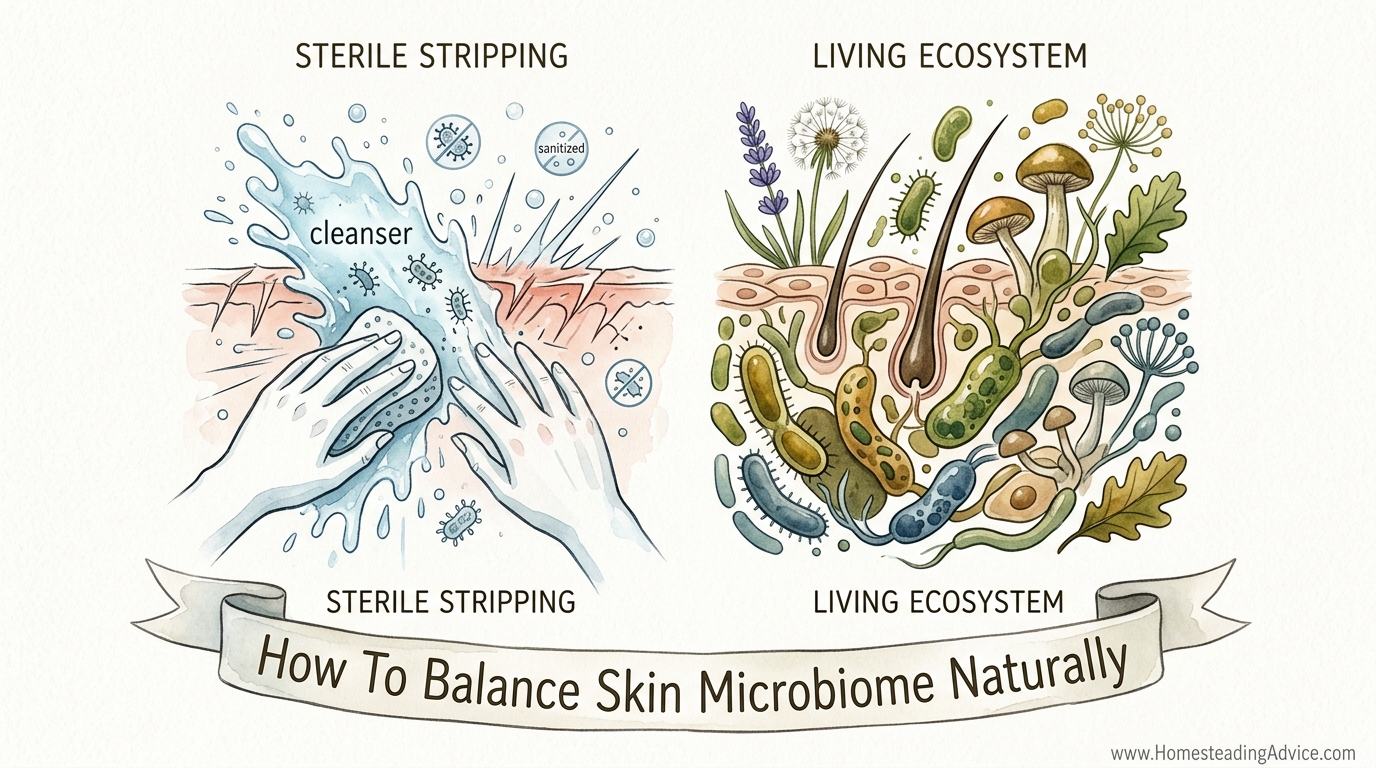
You are treating your face like a hospital floor, but your skin was designed to be a thriving jungle. Every time you use that ‘99% bacteria-killing’ wash, you are murdering the very defense system that prevents acne and wrinkles. It is time to stop cleaning and start culturing your skin’s living biome.
For decades, we have been told that a squeaky-clean face is the hallmark of health. We scrub, peel, and disinfect until our skin is as barren as a scorched field. But your skin is not an inanimate surface to be polished; it is a complex, breathing landscape home to over one billion microbes per square centimeter. These microscopic tenants—bacteria, fungi, and viruses—are not invaders. They are your personal security team, your chemists, and your immune system’s front line.
When you strip away this “skin cloud” with harsh detergents, you leave the door wide open for inflammation and infection. It is no wonder that as our hygiene has become more “advanced,” our rates of eczema, rosacea, and adult acne have skyrocketed. Restoring the balance of your skin’s living ecosystem is about unlearning modern habits and returning to a way of life that respects the biology your ancestors understood without a microscope.
How To Balance Skin Microbiome Naturally
Balancing the skin microbiome naturally involves shifting your mindset from “eradication” to “stewardship.” It means creating an environment where beneficial bacteria can thrive while naturally keeping opportunistic pathogens in check. This process is not about buying more products; it is about doing less and letting nature take the wheel. To understand how to fix the balance, you first need to know what you are protecting.
Your skin is naturally acidic, maintaining a pH between 4.7 and 5.7. This “acid mantle” is the primary regulator of your microbial residents. Beneficial bacteria like Staphylococcus epidermidis thrive in this acidic environment, where they produce natural antibiotics and ceramides that keep your skin barrier waterproof and resilient. When you use alkaline soaps or chlorinated water, you spike your skin’s pH, effectively evicting your best defenders and inviting in “bad” bacteria like Staphylococcus aureus, which is heavily linked to eczema and inflammation.
Real-world restoration means reducing the frequency of washing, choosing pH-balanced cleansers, and reintroducing the skin to natural elements. Think of your skin like a sourdough starter. If you keep washing the jar with bleach, you will never get the yeast to grow. You have to feed it, keep it at the right temperature, and leave it alone long enough to develop its own strength.
The Role of Staphylococcus Epidermidis
This specific bacterium is the hero of your skin’s story. Research shows that S. epidermidis produces an enzyme called sphingomyelinase, which helps your skin manufacture ceramides. These lipids are the mortar between your skin cells that prevent water loss and aging. When this bacterium is healthy, your skin stays hydrated naturally. When it is killed off by “sterile stripping,” your skin becomes dry, brittle, and prone to “inflammaging”—a term researchers use for the chronic inflammation that accelerates aging.
How to Do It: The Living Skin Protocol
Restoring a damaged biome takes patience and a willingness to feel a bit “un-clean” during the transition. Most people see a significant shift in their skin’s texture and clarity within 14 to 28 days—the time it takes for a full cycle of skin cell turnover. Follow these steps to stop the cycle of sterile stripping and start culturing a living ecosystem.
Step 1: The Water Adjustment
Stop using hot water on your face. High temperatures dissolve the natural sebum that feeds your good bacteria. Keep your water lukewarm, ideally below 38°C (100°F). If you live in an area with heavily chlorinated city water, consider a shower filter. Chlorine is a disinfectant designed to kill bacteria in pipes; it does the same thing to your forehead.
Step 2: Ditch the Detergents
Standard soaps and foaming cleansers often contain Sodium Lauryl Sulfate (SLS), which is a harsh surfactant. These chemicals are great for degreasing an engine but devastating to a microbial colony. Switch to oil-based cleansers or “microbiome-friendly” washes that do not produce a heavy lather. Better yet, try washing with just water in the morning and saving the cleanser for the evening to remove the day’s grime.
Step 3: Feed Your Flora
You can apply prebiotics and postbiotics topically to encourage growth. Prebiotics are “food” for bacteria—think inulin or chicory root. Postbiotics are the beneficial byproducts of fermentation, like lactic acid or lysated bacteria. Applying a simple mask of raw, unpasteurized honey once a week is a time-tested way to provide prebiotics while using honey’s natural enzymes to gently balance the skin’s surface.
Step 4: Re-wild Your Environment
Get outside. Research shows that people who spend at least five hours a week in nature or interact regularly with pets have a more diverse and resilient skin microbiome. Soil microbes, though they don’t stay on you forever, “train” your resident bacteria and your immune system to be less reactive. If you can’t get to a forest, even gardening in a backyard without pesticides can help re-populate your “skin cloud.”
Benefits of a Balanced Microbiome
The practical benefits of a cultured biome go far beyond just looking good. When your skin is a thriving jungle rather than a sterile floor, it takes care of itself. You will find that you need fewer products because your skin is doing the work it was designed to do.
- Enhanced Barrier Function: A healthy biome prevents Trans-Epidermal Water Loss (TEWL), meaning your skin stays plump and hydrated without heavy moisturizers.
- Reduced Sensitivity: Many “sensitive skin” issues are actually just a broken biome. Once the bacteria are balanced, redness and stinging often vanish.
- Natural Acne Control: S. epidermidis and other beneficial microbes produce antimicrobial peptides that naturally suppress the overgrowth of acne-causing bacteria.
- Slower Aging: By reducing “inflammaging,” a balanced microbiome protects the collagen and elastin in your dermis, keeping your skin firmer for longer.
Common Mistakes to Avoid
The biggest pitfall is the “cleanliness trap.” We are conditioned to think that if our skin doesn’t feel tight after washing, it isn’t clean. In reality, that tight feeling is the sound of your skin barrier screaming. Avoid these common errors to keep your microbiome intact.
Over-Exfoliation: Using gritty scrubs or high-strength acids (AHAs and BHAs) more than once or twice a week is like a forest fire for your microbes. It wipes out the old growth and the new growth alike. If you must exfoliate, use gentle enzymes or a soft cloth, and never do it until your skin feels raw.
Preservative Overload: Most commercial lotions are packed with preservatives designed to keep the product sterile on the shelf for three years. These same preservatives continue to work on your face, inhibiting the growth of your beneficial flora. Look for products with shorter shelf lives or those specifically formulated to be microbiome-safe.
Antibiotic Misuse: While topical antibiotics are sometimes necessary for severe infections, using them for minor breakouts is like using a sledgehammer to swat a fly. They kill everything, leaving a vacuum that is often filled by even more aggressive, resistant pathogens.
Limitations and When to Seek Help
While a natural approach works for most, it is not a cure-all. There are situations where professional medical intervention is required. If you have a deep, systemic infection, or a skin condition like severe cystic acne that is scarring, you must work with a dermatologist. Natural balancing is a long-term health strategy, not an emergency treatment for acute disease.
Furthermore, if you are immunocompromised, you should be cautious about “re-wilding” or using live probiotic treatments without medical supervision. Your skin’s defenders are “opportunistic,” meaning if your immune system is weak, even “good” bacteria can sometimes cause issues if they enter a deep cut or wound. Always keep hygiene standards high for open injuries.
STERILE STRIPPING vs LIVING ECOSYSTEM
The choice between these two approaches is the difference between constant maintenance and sustainable health. One relies on a never-ending cycle of chemicals, while the other relies on biological synergy.
| Feature | Sterile Stripping (Modern) | Living Ecosystem (Ancestral) |
|---|---|---|
| Primary Goal | Total removal of oil and bacteria. | Maintaining microbial diversity. |
| Skin pH | Alkaline (often 7.0–9.0). | Acidic (4.7–5.5). |
| Main Ingredients | Sulfates, alcohols, preservatives. | Oils, ferments, herbal infusions. |
| Maintenance | High; requires constant “correction.” | Low; skin becomes self-regulating. |
| Long-term Effect | Thinning skin, chronic sensitivity. | Thicker barrier, resilient skin. |
Practical Best Practices
Implementing these habits will make the transition easier and more effective. You don’t have to change everything overnight, but these small shifts pay the biggest dividends over time.
- The “Morning Rinse”: Stop using cleanser in the morning. Your skin doesn’t get “dirty” while you sleep; it is actually producing its most beneficial oils during the night. Rinse with cool water and move straight to your day routine.
- Choose Glass Over Plastic: Some plastics can leach endocrine disruptors that mess with your skin’s hormones. Whenever possible, buy products in glass.
- Eat for Your Skin: The gut-skin axis is real. A diet high in fiber and fermented foods (sauerkraut, kimchi, kefir) supports your gut microbiome, which in turn sends signals to your skin to lower inflammation.
- Watch Your Laundry: Your pillowcase spends eight hours a night against your face. Use fragrance-free, microbiome-friendly detergents to ensure you aren’t “stripping” your skin while you sleep.
Advanced Considerations: The Skin Fast
For those who want to see what their skin is truly capable of, try a “skin fast.” This involves using absolutely no products—no cleansers, no moisturizers, no makeup—for 72 hours. This allows your skin’s pH to reset fully and forces your microbial colonies to stabilize without external interference.
During a skin fast, you may notice your skin feels oily or dry for the first day, but by day three, most people find their skin reaches a surprising state of equilibrium. It is a powerful way to see where your skin’s baseline truly is. Do this during a weekend when you don’t have to be in a professional setting, and pay close attention to how your skin feels when it is finally allowed to breathe.
A Realistic Scenario: The Transition Phase
Consider the case of a lifelong “scrubber” who switches to a microbiome-first routine. In the first week, they might experience a minor “purge” or a few small whiteheads. This isn’t a bad thing; it’s the result of the skin’s pH shifting and the old, trapped sebum being released. By week three, the constant redness they thought was “just their skin type” begins to fade. By month two, they realize they no longer need the heavy nightly moisturizer because their S. epidermidis population is back to producing the ceramides they were previously buying in a jar.
Final Thoughts
Your skin is a living, breathing testament to your connection with the world. Treating it like a sterile surface is not just a cosmetic error; it is a biological one. By moving away from the “99% killing” mentality and toward a culture of care, you allow your body to do what it has spent millions of years perfecting: protecting you.
Start small. Turn down the water temperature, swap your harsh soap for a gentle oil, and spend a little more time with your hands in the dirt. Your skin isn’t a problem to be solved with more chemicals; it is an ecosystem to be nurtured with wisdom. When you stop treating your face like a hospital floor, you might just find that the “thriving jungle” underneath is the healthiest you’ve ever been.
Experiment with these changes and listen to your skin. It will tell you when it’s happy. If you want to dive deeper into self-reliance and ancestral health, consider looking into how traditional oil infusions and herbal salves can further support your skin’s natural resilience.