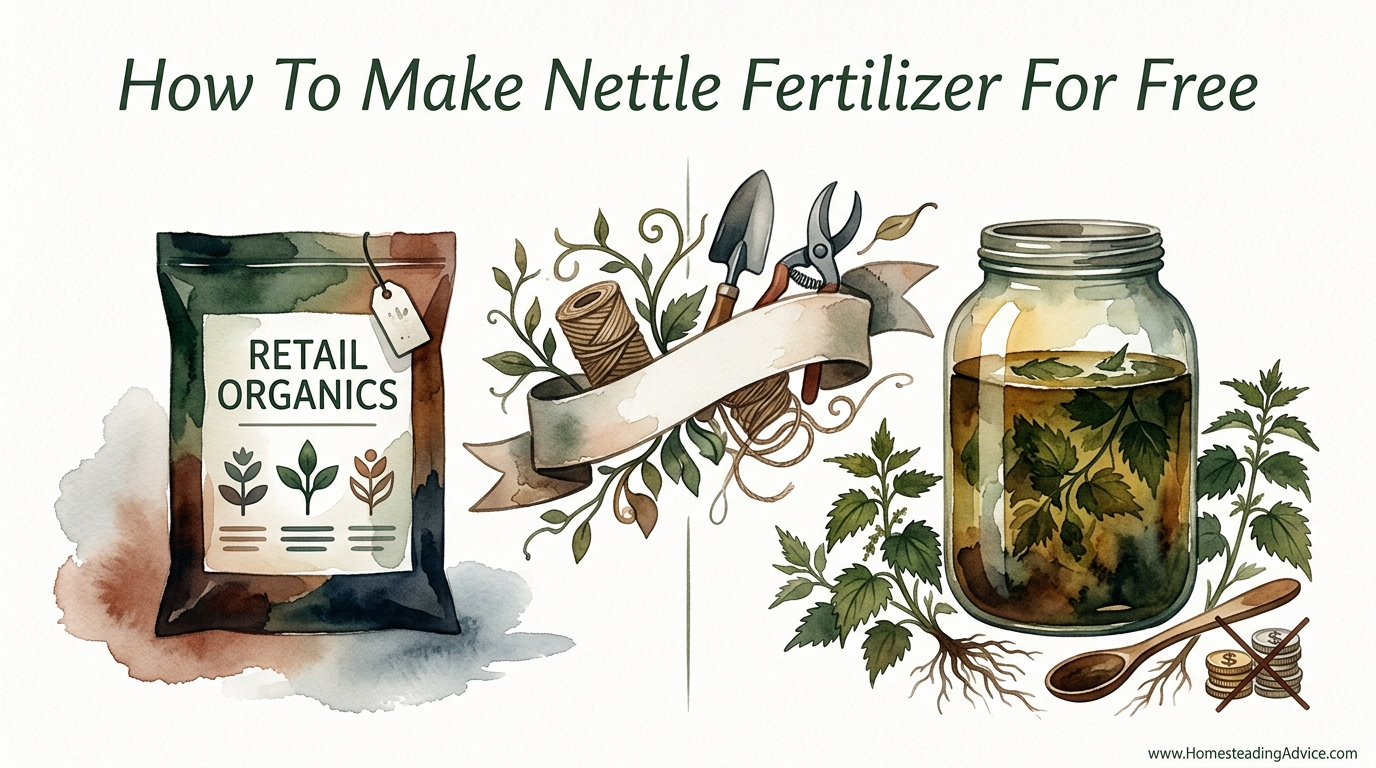
The most powerful nitrogen boost in the world is currently growing in the ditch behind your house for zero dollars. Stop paying for plastic bottles and shipping costs for ‘organic’ labels. Stinging nettles and comfrey are nutrient dynamic accumulators that pull minerals from deep in the earth. By fermenting them in a bucket of water, you create a high-potency liquid gold that outperforms the store-bought stuff every time.
Gardening used to be a closed-loop system where nothing left the farm and nothing needed to be bought from a shelf. Our ancestors knew that the plants we often call weeds are actually the most effective tools for restoring soil health. They understood that a healthy garden is not built on synthetic salts, but on the biological breakdown of local organic matter. If you are tired of the endless cycle of purchasing expensive fertilizers that promise the world but leave your soil dead, it is time to look at the green growth standing right outside your fence.
How To Make Nettle Fertilizer For Free
Nettle fertilizer is a fermented plant juice made by steeping the leaves and stems of the stinging nettle (Urtica dioica) in water. This process extracts a dense concentration of nitrogen, iron, magnesium, and calcium into a liquid form that plants can absorb almost instantly. It acts as a biological tonic that strengthens the cellular structure of your crops while providing the fuel needed for rapid leaf development.
In the real world, you see these plants thriving in areas with high soil compaction or nitrogen runoff because they are nature’s reclamation crew. They find the minerals that other plants cannot reach. When you harvest these “weeds,” you are essentially harvesting the deep-earth minerals they have already mined for you. Think of nettle tea as a home-brewed multivitamin for your garden. It is particularly useful for heavy feeders like kale, corn, and early-season tomatoes that need a massive push of green growth before they begin to fruit.
How It Works: The Fermentation Process
Traditional liquid fertilizer relies on anaerobic or aerobic fermentation to break down plant tissues. This process mimics the natural decomposition that happens on the forest floor, but it accelerates the timeline from months to weeks. You are creating a biological soup where beneficial bacteria unlock the nutrients tied up in the plant’s fibers.
The Standard Wet Method
Gather a large harvest of stinging nettles, ensuring you wear thick gloves to avoid the formic acid in the hairs. Chop the plants into smaller pieces to increase the surface area for bacterial action. Fill a large plastic bucket or wooden barrel about three-quarters of the way with the chopped greens. Do not use metal containers, as the fermentation process can cause a chemical reaction with the metal that may harm your plants.
Fill the container with rainwater. Chlorine in tap water can kill the very bacteria you need for the fermentation process. If you must use tap water, let it sit out for twenty-four hours to allow the chlorine to dissipate. Weigh the nettles down with a heavy stone so they remain submerged. Cover the bucket with a loose lid or a piece of burlap. This keeps flies out while allowing gases to escape.
The Fermentation Timeline
Stir the mixture every few days to introduce a small amount of oxygen. Within forty-eight hours, you will notice small bubbles forming on the surface. This is a sign that the microbes are hard at work. After about two to four weeks, depending on the temperature, the liquid will turn dark green or brown and the bubbling will stop. The smell will be quite pungent—often described as a mix of old manure and rotting hay. This is exactly what you want. Strain out the remaining plant fibers and put them in your compost pile.
The Waterless Concentrate Method
If you want a more potent extract without the massive volume of water, use the compression method. Pack your nettles or comfrey into a tall container that has a small drainage hole at the bottom. Place a heavy weight on top of the plants. Over the course of several weeks, the plant cells will collapse and a dark, thick liquid will drip out of the bottom hole into a waiting jar. This concentrate is shelf-stable for much longer than the watered-down version and takes up far less space in the tool shed.
The Science of Dynamic Accumulation
Dynamic accumulators are plants that possess deep taproots capable of penetrating the subsoil. Most garden vegetables have relatively shallow root systems that stay within the top 30 centimeters (12 inches) of soil. Over time, this top layer becomes depleted of essential trace minerals. Stinging nettles and comfrey, however, can send roots down 2 meters (over 6 feet) or more.
At these depths, they access minerals like silica, sulfur, and zinc that have leached away from the surface over decades. They pull these minerals into their leaves. When we ferment these leaves, we are bringing those deep-earth nutrients back to the surface where our tomatoes and peppers can actually reach them. Stinging nettles are specifically known for high levels of nitrogen and iron, while comfrey is the undisputed king of potassium and calcium.
Benefits of Home-Brewed Liquid Gold
Using these fertilizers provides a measurable boost to plant health that goes beyond simple growth. The silica found in nettles helps strengthen the cell walls of your plants, making them more resistant to sucking insects like aphids and mites. A plant with strong cell walls is like a fortress that is harder for pests to penetrate.
Biological activity is another major advantage. Unlike synthetic fertilizers that can kill soil microbes with high salt content, fermented teas are alive. They introduce a diverse population of bacteria and fungi into the soil. These microbes continue to work long after the liquid has dried, breaking down other organic matter in the soil and making it available to your crops. This creates a self-sustaining cycle of fertility rather than a chemical dependency.
The cost savings are undeniable. A single gallon of high-quality organic liquid fertilizer can cost thirty dollars or more at a retail store. In contrast, a five-gallon bucket of nettle tea costs nothing but fifteen minutes of harvesting. For a large homestead or a community garden, these savings can amount to hundreds of dollars every growing season.
Challenges and Common Mistakes
The most frequent error is applying the tea without proper dilution. This stuff is powerful. If you pour the undiluted concentrate directly onto a young seedling, the high nitrogen content can “burn” the roots or cause the plant to produce too much soft, green growth that attracts pests. Always follow the “weak tea” rule. Your mixture should look like a pale amber liquid, roughly a 1:10 ratio of fertilizer to water.
Smell is the second biggest challenge. If you brew this in a small backyard close to neighbors, they might complain about the odor. To mitigate this, add a handful of stone dust or a few drops of valerian extract to the brew to help neutralize the scent. Alternatively, use the waterless compression method mentioned earlier, which is significantly less offensive to the nose.
Harvesting at the wrong time can also cause issues. If you harvest stinging nettles after they have gone to seed, you risk introducing thousands of nettle seeds into your garden beds when you apply the fertilizer. Always cut your plants before they flower. This ensures all the energy and nutrients are still concentrated in the leaves rather than being diverted to seed production.
Limitations and Environmental Constraints
While these fertilizers are incredible, they are not a total replacement for good soil management. Dynamic accumulators can only accumulate what is actually present in your subsoil. If your land is severely deficient in a specific mineral, the plants cannot create it out of thin air. It is still wise to perform a soil test every few years to ensure your baseline levels are healthy.
Weather plays a significant role in the effectiveness of these teas. In extremely wet seasons, the nutrients can wash through the soil too quickly before the plants can take them up. In very cold weather, the microbial activity in the fermentation bucket will slow to a crawl. You must plan your brewing cycles to coincide with the warmth of late spring and early summer when the plants are in their peak vegetative state.
Practical Comparison: Nettle vs. Comfrey vs. Store-Bought
Understanding which tool to use is the key to a productive harvest. Not all fertilizers serve the same purpose.
| Feature | Nettle Tea | Comfrey Tea | Retail Organic |
|---|---|---|---|
| Primary Nutrient | Nitrogen (N) | Potassium (K) | Varies (Balanced) |
| Best For | Leafy Greens / Early Growth | Flowers / Fruit Production | General Maintenance |
| Cost | Free | Free | $20 – $50 per gallon |
| Microbial Life | High | High | Low to Moderate |
Practical Tips and Best Practices
Always apply your liquid fertilizer in the early morning or late evening. If you apply it during the heat of the day, the water will evaporate too quickly, leaving a concentrated crust of nutrients on the leaves or soil surface that can cause damage. Foliar feeding—spraying the diluted tea directly onto the leaves—is a highly effective way to treat nutrient deficiencies quickly. The stomata on the underside of the leaves act like tiny mouths that can absorb minerals in a matter of hours.
When choosing comfrey, look for the “Bocking 14” variety. This specific strain was developed by Lawrence Hills at the Henry Doubleday Research Association. It is sterile, meaning it will not produce seeds that take over your entire garden. It grows incredibly fast, allowing you to harvest the leaves up to four or five times a season. Once you plant a patch of Bocking 14, you have a permanent fertilizer factory that will outlive you.
Use a fine mesh screen when straining your brew. Small bits of plant matter can clog your watering can or sprayer, leading to frustration in the garden. Keep a designated “smelly bucket” for your ferments and store it in a shady spot. Direct sunlight can overheat the brew and kill off the beneficial microbes you are trying to cultivate.
Advanced Considerations for Serious Practitioners
For those looking to take their soil health to the next level, consider the principles of Korean Natural Farming (KNF). You can create a Fermented Plant Juice (FPJ) by mixing equal parts chopped nettles and brown sugar. The sugar extracts the juice through osmotic pressure, creating a stable, shelf-ready concentrate that does not require the large volumes of water used in traditional steeping. This method preserves more of the plant’s hormones and enzymes.
Another advanced technique is the synergistic brew. Instead of making pure nettle or pure comfrey tea, create a “Master Blend” that includes seaweed, dandelion, and yarrow. Seaweed adds over sixty trace minerals and growth hormones, while dandelion adds extra iron. This cocktail provides a full spectrum of nutrition that covers every stage of a plant’s life cycle, from germination to harvest.
Real-World Scenario: The Tomato Growth Strategy
Imagine you are growing heavy-cropping heirloom tomatoes. In the first few weeks after transplanting, your goal is to build a massive root system and a strong “engine” of green leaves. During this phase, apply a 1:10 dilution of nettle tea every two weeks. This provides the nitrogen and iron needed for that deep green, vigorous growth.
Once the first flower clusters appear, switch your formula. At this stage, too much nitrogen will lead to massive plants with very little fruit. Transition to comfrey tea. The high potassium levels in comfrey are essential for flower development and the transport of sugars into the developing fruit. By switching your fertilizer to match the plant’s biological needs, you will see larger, sweeter tomatoes and a plant that is much more resistant to late-season blights.
Final Thoughts
Mastering the art of fermented plant fertilizers is a foundational step toward true self-reliance. It moves you away from the consumer mindset and back into a relationship with the land. When you realize that the most potent nutrients your garden needs are already growing within reach, the entire scale of what is possible in your backyard changes. You no longer need to worry about supply chain disruptions or the rising cost of “organic” certifications.
Take the time this season to find a patch of nettles or plant a small stand of comfrey. Start with one bucket and observe the results. You will see deeper greens, sturdier stems, and a vibrancy in your crops that chemical pellets simply cannot replicate. This is ancestral wisdom at its best—simple, effective, and free.
Experiment with your dilutions and timing. Every garden has its own unique soil chemistry and microclimate. By paying attention to how your plants respond to these liquid tonics, you will become a better observer of nature and a more skilled practitioner of the craft. The tools for a world-class harvest are already in your hands; you just have to pick them up.