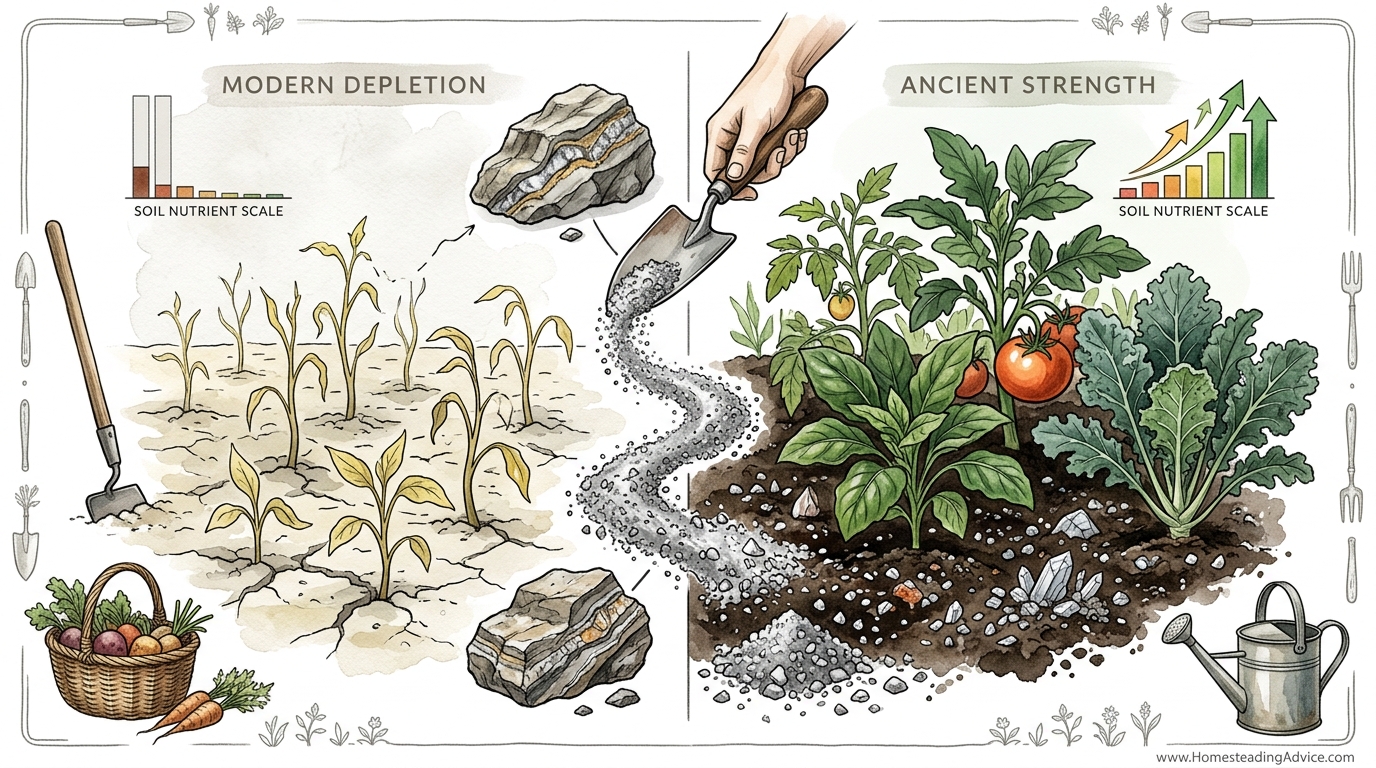
Modern produce has 40% fewer minerals than the food our grandparents ate; the secret to reclaiming that nutrition isn’t in a lab, it’s in the rocks. We’ve spent 50 years mining our soil of its minerals to get faster growth, but we’ve sacrificed flavor and nutrition. Returning to ‘Ancient Strength’ with volcanic rock dust allows you to build soil that stays fertile for generations, not just one season.
This shift toward remineralization represents a return to ancestral wisdom. For thousands of years, civilizations flourished on the floodplains of the Nile or in the shadows of active volcanoes because the earth was constantly refreshed with new mineral deposits. Today, our closed-loop garden systems often lack this natural replenishment, leading to “tired” soil that produces weak, flavorless crops.
Understanding how to reintegrate these primordial elements is the key to self-reliance. When you feed the soil what it truly needs, the soil feeds you in return with a density of nutrition that most modern grocery shoppers can only dream of. This guide will walk you through the practical steps of transforming your garden into a mineral-rich powerhouse.
How To Use Rock Dust For Nutrient Dense Vegetables
Rock dust is essentially stone that has been mechanically ground into a fine, flour-like powder. It serves as a long-term reservoir of trace elements and micronutrients that are often missing from standard N-P-K (Nitrogen, Phosphorus, Potassium) fertilizers. While synthetic fertilizers act like a shot of caffeine for plants, rock dust acts like a slow-cooked, nutrient-rich broth for the entire soil ecosystem.
Vegetable gardeners use this material to “remineralize” their beds, mimicking the way glaciers once crushed mountains into fertile silt. In a practical sense, it provides over 70 different trace minerals including silica, magnesium, calcium, and iron. These elements are the building blocks of plant health, helping to create thicker cell walls and more complex enzyme systems.
Imagine your soil as a biological engine. Organic matter—like compost and mulch—is the fuel that keeps the engine running. Minerals from rock dust are the durable steel parts of the engine itself. Without the minerals, the engine wears out regardless of how much fuel you add. Applying these stone powders ensures your soil has the structural integrity to produce nutrient-dense vegetables year after year.
The Mechanism of Mineral Release
Success with rock dust depends on understanding that plants cannot eat rocks directly. The process of turning stone into food is a biological partnership. When you add rock dust to your garden, you are essentially setting the table for billions of soil microorganisms.
Bacteria and fungi in the rhizosphere—the area around plant roots—secrete mild organic acids. These acids slowly dissolve the microscopic stone particles, releasing ions that the plant can then absorb. This “weathering” happens at a microscopic scale, providing a steady, metered dose of nutrition that won’t leach away during a heavy rainstorm.
Microbial activity is the engine of this transition. If your soil is dead or chemically saturated, the rock dust will simply sit there, inert. This is why experienced growers always combine rock dust with high-quality compost or worm castings. The organic matter provides the home and the food for the microbes that do the heavy lifting of mineral extraction.
Types of Rock Dust and Their Mineral Profiles
Not all stones are created equal. Depending on your soil’s specific needs, you might choose one type of rock powder over another. Most practitioners focus on three primary varieties: Basalt, Glacial, and Azomite.
Basalt Rock Dust
Basalt is a volcanic rock and is widely considered the gold standard for vegetable gardens. It is particularly rich in magnesium, iron, and calcium. Because it comes from deep within the earth’s mantle, it contains a balanced spectrum of elements that are highly stable.
One of the greatest advantages of basalt is its high silica content. Silica is often overlooked, but it is vital for strengthening plant stalks and leaves. This structural strength makes vegetables more resistant to sucking insects and fungal diseases. Basalt is also “paramagnetic,” a property that some researchers believe helps organize soil energy and stimulates microbial growth.
Glacial Rock Dust
This material is a “mixed bag” of minerals. It is created by the movement of glaciers as they grind various types of rock—granite, limestone, quartz—into a fine silt known as “glacial flour.” Because it contains a mix of different stone types, it offers a broad diversity of trace elements.
Glacial rock dust is often more affordable and is an excellent choice for general remineralization. It is particularly effective in areas that were never glaciated, as it introduces elements that may have been missing from the local geology for millions of years.
Azomite
Azomite is a brand name for a unique deposit of volcanic ash and minerals found in Utah. The name stands for “A to Z of Minerals Including Trace Elements.” It is extremely fine and highly soluble compared to other rock dusts.
Gardeners often use Azomite as a “booster” rather than a base amendment. Because it is so concentrated, a little goes a long way. It is particularly prized for its ability to increase “Brix” levels—the sugar and mineral content—in fruits and vegetables, leading to better flavor and longer shelf life.
How to Apply Rock Dust in Your Garden
Applying rock dust is a straightforward process, but timing and technique matter if you want the best results. You can apply it at any time of year, though fall and spring are the most common windows.
Application Rates
For a standard garden bed, a moderate application is usually best. You do not need to overcomplicate the math.
- New Garden Beds: Apply 10 pounds per 100 square feet (approx. 5 kg per 10 square meters).
- Established Beds: Apply 5 pounds per 100 square feet (approx. 2.5 kg per 10 square meters) annually or every other year.
- Potting Mixes: Mix 1 to 2 cups of rock dust per cubic foot (approx. 30 liters) of soil.
- Tree Planting: Mix 1 to 5 pounds (0.5 to 2.2 kg) into the backfill soil depending on the size of the tree.
The Best Method for Application
Broadcasting by hand is the most common method. Choose a day with very little wind, as the fine powder can easily blow away. Sprinkle the dust evenly over the surface of the soil.
Once the dust is down, lightly rake it into the top 2 inches (5 cm) of soil. This places the minerals in the “active zone” where microbes and roots are most concentrated. Follow the application with a deep watering to help settle the particles and begin the biological activation process.
Adding rock dust to your compost pile is another “pro tip.” The heat and intense microbial activity of a compost pile help break down the rock dust before it even hits your garden. Aim for about 20 to 30 pounds (9 to 13 kg) of rock dust per cubic yard (0.75 cubic meters) of raw compost material.
Tangible Benefits of Mineral-Rich Soil
The results of remineralization are rarely overnight, but they are profound and long-lasting. Over one or two growing seasons, you will notice shifts in how your plants behave and how your food tastes.
Increased Nutrient Density
Vegetables grown in mineral-rich soil contain significantly higher levels of vitamins and minerals. Research has shown that produce grown with volcanic rock dust can have 20% to 50% more calcium, magnesium, and iron than produce grown with synthetic N-P-K alone. This is the difference between eating a “filler” vegetable and eating “medicine.”
Higher Brix Levels and Better Flavor
“Brix” is a measurement of the dissolved solids—mostly sugars and minerals—in a plant’s sap. High-Brix vegetables taste sweeter and have a more complex, savory profile. They also have a natural “shimmer” and keep longer in the refrigerator without wilting. Because rock dust provides the trace elements needed for complex carbohydrate production, it is the most direct path to prize-winning flavor.
Natural Pest and Disease Resistance
Silica from rock dust is incorporated into the cell walls of the plant, creating a physical barrier. Insects like aphids or mites find it harder to pierce the toughened leaves. Furthermore, a mineralized plant has a more robust “immune system,” making it less susceptible to common garden plagues like powdery mildew or tomato blight.
Common Mistakes and Pitfalls
While rock dust is safe and natural, there are a few ways to get it wrong. Avoiding these common errors will save you time and money.
Applying to Dead Soil
The most frequent mistake is thinking rock dust will work in soil that lacks organic matter. Without microbes to process the stone, the minerals remain locked away. Always ensure you are also adding compost, mulch, or cover crops to keep the biology alive.
Expecting Instant Results
Rock dust is a slow-release amendment. It is not like a liquid fish fertilizer that turns a yellow plant green in 48 hours. It is an investment in the “infrastructure” of your soil. Expect to see the full benefits in the second or third season after application.
Using the Wrong Particle Size
If the rock is too coarse—like builder’s sand—it will take decades to break down. You want material that is ground to a “minus 200 mesh” or finer. This provides the maximum surface area for microbes to work on. If the bag feels like flour, it is the right stuff. If it feels like gritty sand, it is too coarse for rapid results.
Limitations and Environmental Considerations
Rock dust is not a “magic bullet” that fixes every soil problem. Understanding its limits will help you manage your expectations.
Soil pH Influence
Most volcanic rock dusts, like basalt, are slightly alkaline or neutral. While they are not as aggressive as agricultural lime, applying massive amounts can slowly raise the pH of your soil. If you are growing acid-loving plants like blueberries or azaleas, use rock dust sparingly and monitor your pH levels.
Logistics and Carbon Footprint
Rock is heavy. Transporting thousands of pounds of stone across the country has a significant carbon cost. Whenever possible, source your rock dust locally. Many quarries produce “crusher fines” or “stonedust” as a byproduct of gravel production. If you can find a local source of basalt or granite dust, it is often much cheaper and more environmentally friendly than buying branded bags from far away.
Existing Mineral Balance
If your soil is already naturally mineral-rich, adding more rock dust may provide diminishing returns. A professional soil test is the only way to know for sure. However, for most urban gardens and overworked agricultural plots, depletion is a safe assumption.
Advanced Considerations for Serious Practitioners
Once you have mastered the basics, you can look into more nuanced ways to optimize your remineralization strategy.
Paramagnetism
Basalt rock dust often possesses a high “paramagnetic” value. This refers to the rock’s ability to become temporary magnetic in the presence of a magnetic field. Some pioneers of sustainable agriculture, such as Dr. Phil Callahan, argued that paramagnetic stone acts as an antenna for atmospheric energy, stimulating the growth of aerobic bacteria. While still a fringe science in some circles, many top-tier organic farmers swear by high-paramagnetic basalt for exceptional yields.
The Role of Fulvic and Humic Acids
To speed up the breakdown of rock dust, some growers use liquid humic or fulvic acid. These organic compounds are powerful chelators. They “grab” the minerals from the rock dust and hold them in a form that is immediately available to the plant. Adding a small amount of humic acid to your watering can when you first apply rock dust can jumpstart the mineralization process.
Comparison Table: Choosing the Right Amendment
| Amendment Type | Primary Benefit | Best For… | Relative Cost |
|---|---|---|---|
| Basalt Rock Dust | High Silica, Magnesium, Iron | Pest resistance, general fertility, strengthening stalks. | Moderate |
| Glacial Rock Dust | Broad Spectrum Diversity | Correcting unknown deficiencies, large scale beds. | Low |
| Azomite | 70+ Trace Elements | Increasing Brix (sugar), rapid nutrient boost. | High |
| Granite Dust | Potash and Potassium | Clay soil drainage, potassium-hungry crops. | Low |
Practical Tips for Best Results
To get the most out of your “Ancient Strength” strategy, follow these best practices derived from experienced growers.
- Mix with Biology: Never apply rock dust to bare, dry earth. Always mix it with compost or tuck it under a layer of mulch.
- Layering: If you use a “no-dig” or “back to Eden” gardening style, simply sprinkle the dust on top of your compost layer and cover it with wood chips or straw. Gravity and worms will do the rest.
- Consistency over Quantity: It is better to add a small amount every year than to dump 500 pounds once a decade. Soil is a living thing and prefers steady, incremental changes.
- Watch the Wind: Wear a simple dust mask when applying. Volcanic dust is natural, but breathing in fine particulates is never good for the lungs.
- Combine with Cover Crops: The roots of cover crops like clover or rye are excellent at “mining” rock dust. The plants absorb the minerals, and when you chop-and-drop the cover crop, those minerals are returned to the soil in a highly bioavailable form.
Scenario: The Transformation of a Depleted Garden
Let’s look at a practical example. Imagine a 400-square-foot (approx. 37-square-meter) backyard garden that has been growing tomatoes and squash for ten years. The owner noticed that the tomatoes were getting smaller and pest pressure was increasing, despite regular use of organic liquid fertilizers.
The gardener decided to remineralize. In late autumn, they applied 40 pounds (18 kg) of basalt rock dust across the entire area. They followed this with a 2-inch (5 cm) layer of fresh compost and sowed a winter cover crop of crimson clover.
By the following summer, the results were visible. The tomato plants grew thicker stems and the leaves were a deep, waxy green. When measured with a refractometer, the tomato sap showed a Brix reading of 12, compared to the previous year’s reading of 6. The most striking change was the lack of hornworms; the plants had become “tougher” and less attractive to the pests. This garden had reclaimed its ancient strength.
Final Thoughts
Rebuilding the mineral foundation of your soil is one of the most powerful acts of self-reliance a gardener can perform. We live in an era where the “empty” calories of industrial agriculture have become the norm. Choosing to remineralize your soil is a conscious rebellion against that trend. It is a commitment to quality, flavor, and the long-term health of your family.
Remember that you are working with the timeline of the earth, not the timeline of a laboratory. The stones you spread today will still be feeding your soil when your grandchildren are harvesting from the same beds. This is the definition of sustainable stewardship.
Experiment with different types of rock dust, observe how your plants respond, and take pride in the fact that you are producing food with the same mineral complexity that fueled the great civilizations of the past. Your garden isn’t just a place to grow vegetables; it’s a place to restore the link between the earth’s ancient strength and our modern vitality.