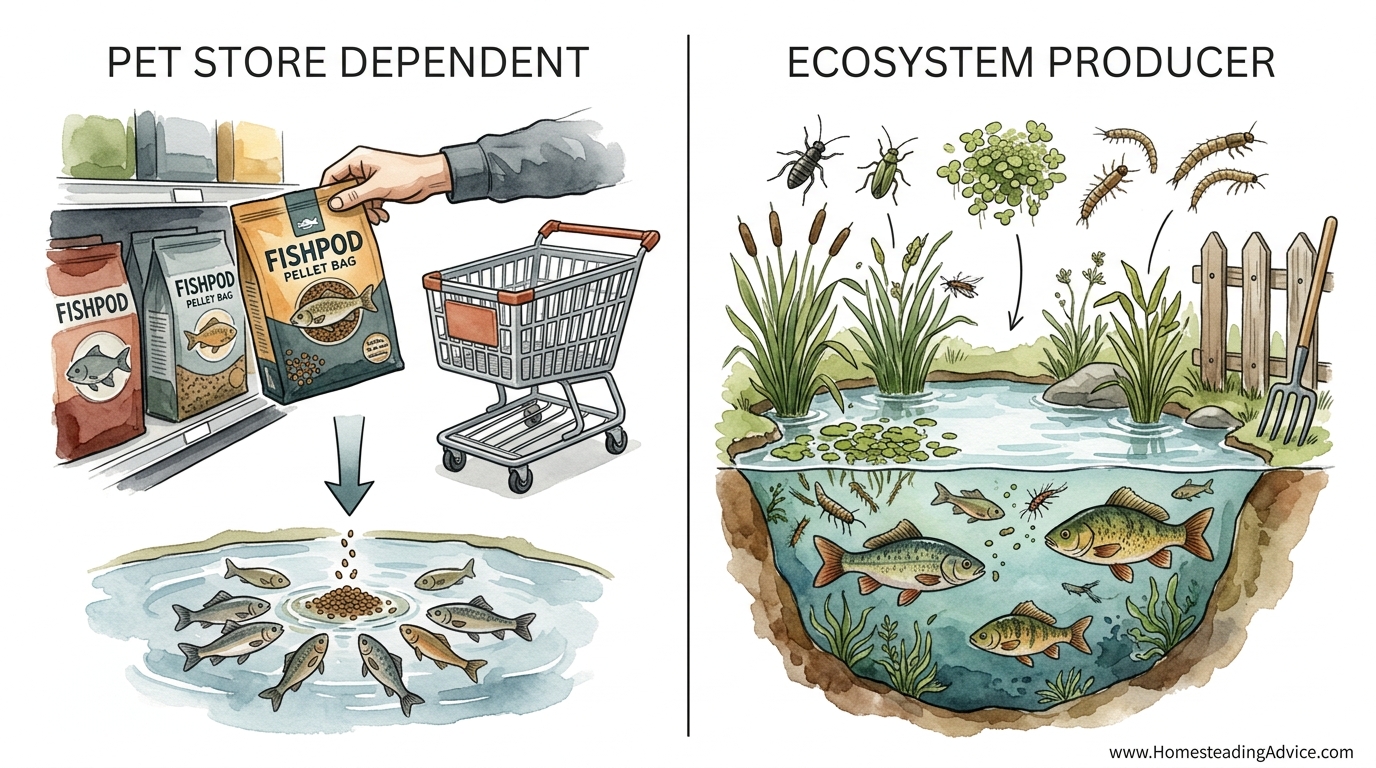
Why buy processed pellets when the sun will feed your fish for free? If you are buying fish food every month, you aren’t running a pond – you’re running a water-based pet cage. By integrating simple insect traps and specific floating plants, you can create a production system where your fish thrive on high-protein, natural food that costs you zero dollars.
Managing a pond this way shifts your role from a consumer to a steward of a living cycle. You stop being a customer at the big-box pet store and start becoming an ecosystem producer. This approach relies on the ancient logic of the food chain, where sunlight, waste, and local biology work together to provide everything your fish need to grow fat and healthy.
Traditional pond keeping often ignores the massive amount of free energy surrounding the water. Every flying insect, every blade of grass, and every ray of summer sun is a potential calorie for your fish. Capturing those calories requires a bit of setup and a change in perspective, but once the system is running, the workload drops significantly while the health of your fish skyrockets.
How To Feed Pond Fish For Free
Feeding pond fish for free is the practice of establishing a self-sustaining nutrient cycle within a contained body of water. It moves away from “extensive” feeding, where you provide 100% of the nutrition via pellets, to a “natural” or “semi-intensive” system where the pond produces its own forage. This method mimics how wild fish survive in lakes and streams, but it optimizes the environment to support higher stocking densities than nature usually allows.
In a natural setting, fish are opportunistic omnivores. They spend their days grazing on algae, hunting for mosquito larvae, and waiting for terrestrial insects to fall from overhanging branches. A backyard pond can provide these same resources if you design it as a biological trap. The goal is to maximize the surface area for “periphyton” (the slime and algae fish graze on) and to create attractants for high-protein insects.
This concept is used globally in sustainable aquaculture and permaculture. Small-scale farmers in tropical regions have used these methods for centuries, often integrating ducks or livestock whose waste fertilizes the water to grow “green water” (phytoplankton). In a modern backyard context, we focus on cleaner, more controlled methods like cultivating high-protein floating ferns and using mechanical bug attractants.
Designing the Living Pantry: How It Works
Success in a zero-cost feeding system depends on three primary pillars: floating aquatic plants, insect recruitment, and the cultivation of microfauna. You are essentially building a tiered buffet where different food sources peak at different times of the day and season.
The High-Protein Harvest: Floating Plants
Floating plants are the foundation of a self-feeding pond. They absorb excess nutrients directly from the water and convert them into leafy biomass that many fish, such as Koi, Grass Carp, and even Tilapia, will eat directly.
Duckweed (Lemna minor) is the undisputed king of free fish food. This tiny plant can double its mass in 24 to 48 hours under ideal conditions. It contains between 30% and 43% crude protein on a dry-matter basis, making it nutritionally comparable to high-end commercial soy-based pellets. You can grow it in a separate “nursery” tank or a cordoned-off corner of the pond to ensure the fish don’t eat it all at once.
Azolla (Water Fern) is another powerhouse. This plant lives in a symbiotic relationship with cyanobacteria that fix nitrogen from the air. This means Azolla adds fertility to your system rather than just recycling what is already there. It is rich in essential amino acids and grows with incredible speed in still water.
Engineering the Air-to-Water Pipeline: Insect Traps
Insects are the “meat” in your fish’s diet. They provide the fats and proteins necessary for rapid growth and vibrant color. You can recruit them using two main types of traps: light-based and scent-based.
UV Light Traps: Mount a low-voltage bug zapper or a simple UV light 6 to 12 inches (15 to 30 cm) above the water surface. Moths, beetles, and flies are attracted to the glow at night. When they hit the light or the housing, they fall into the water. Your fish will quickly learn to congregate under the light at dusk, waiting for the “manna” to fall from the sky.
Black Soldier Fly (BSF) Bins: This is perhaps the most efficient way to turn kitchen scraps into high-grade fish protein. Hang a modified plastic bucket over your pond. Fill it with fruit peels, vegetable scraps, and coffee grounds. Black soldier flies will lay eggs in the waste. As the larvae (grubs) mature, their instinct is to crawl upward and out of the waste to pupate. Drill small holes at the top of the bucket with “ramps” leading to the exit. The grubs will crawl out, fall into the pond, and provide a 40% protein, 30% fat meal that fish find irresistible.
Managing the Benthic Buffet: Microfauna
The water column itself can be a breeding ground for live food. By adding submerged structures like rock piles or bundles of sticks, you create a habitat for Scuds (Gammarus) and Daphnia (Water Fleas). These tiny crustaceans eat algae and detritus, turning waste into bite-sized protein for smaller fish and fry.
Benefits of a Self-Feeding Ecosystem
Switching to a natural feeding system offers more than just financial savings. It fundamentally changes the health of the water and the animals within it.
* Zero Recurring Cost: Once the plants are established and the traps are built, your monthly feed bill disappears.
* Superior Nutrition: Natural foods like duckweed and live insects contain enzymes and micronutrients often lost during the high-heat processing of commercial pellets.
* Automatic Waste Management: Plants like duckweed and Azolla act as biological filters, stripping ammonia and nitrates from the water to fuel their growth.
* Better Fish Health: Fish that forage throughout the day have better muscle tone and less “fatty liver” issues than those fed large, infrequent meals of processed grain.
* Resilience: If you go on vacation or can’t get to the store, your pond continues to feed itself. It is a closed loop that doesn’t rely on global supply chains.
Common Pitfalls and Management Errors
While nature does the work, you still have to steer the ship. Most failures in natural feeding come from a lack of balance.
Over-harvesting the Nursery: If you allow your fish access to the entire duckweed crop, they will likely eat it faster than it can reproduce. Always keep a backup supply in a separate tub or a screened-off area of the pond.
Attracting Nuisance Insects: Scent-based traps, like those using rotting meat to attract flies, can be effective but may also attract neighborhood pets or create foul odors if not managed. Place these away from seating areas. Use the Black Soldier Fly method instead, as they are not “pest” flies and do not carry diseases like common houseflies.
Nutrient Imbalance: If you rely heavily on “green water” (phytoplankton), a sudden cloudy day or a hot spell can cause an algae crash. This depletes oxygen and can kill fish overnight. Always ensure you have adequate aeration, such as a waterfall or air stone, regardless of how you feed.
Limitations of Natural Feeding Systems
Natural feeding is not a “magic bullet” for every situation. There are realistic boundaries to what this method can achieve.
Climate Constraints: Most high-protein floating plants and insect traps are highly seasonal. In regions where temperatures drop below 50°F (10°C), plant growth stalls and insects disappear. During these months, fish metabolism also slows, so they may not need food, but you cannot rely on natural production in a frozen landscape.
Stocking Density Limits: You cannot keep 50 large Koi in a small pond and expect them to live on duckweed alone. Natural systems have a carrying capacity. If you want to feed for free, you must stock your pond according to what the environment can produce, not how many fish you can fit in the water.
Growth Rates: Fish fed a diet of 100% natural forage may grow slightly slower than those fed “performance” pellets designed for rapid weight gain. This is a trade-off for better health and zero cost.
Practical Tips for Immediate Application
If you want to start today, follow these steps to begin weaning your fish off the bag.
- Start a Duckweed Tub: Find a 20-gallon (75-liter) tub, fill it with pond water, and place it in full sun. Add a handful of duckweed. In a week, you will have a carpet you can begin harvesting.
- Install a Dusk Light: Set a simple outdoor light on a timer to turn on for 3 to 4 hours starting at sunset. Observe your fish; they will likely start “hunting” the surface within three days.
- Build a “Scud House”: Take a bundle of plastic mesh or a pile of small lava rocks and place it in a shallow, sunlit area of the pond. This protected zone allows micro-crustaceans to breed without being instantly eaten.
- Monitor Water Temps: Remember that as water warms, fish need more protein. As it cools below 55°F (13°C), their ability to digest even natural food decreases.
Advanced Considerations: Integrating the Cycle
For the serious practitioner, feeding for free is just the beginning. You can integrate your pond with other home systems to maximize efficiency.
Aquaponics Integration: Use the nutrient-rich water from your pond to grow terrestrial vegetables. The plants clean the water, and any “pest” caterpillars or overripe fruit from the garden can be tossed back into the pond as a high-calorie supplement.
Vermiculture: Raising red wiggler worms in a compost bin provides a year-round source of “emergency” protein. If a cold snap hits and your insect traps go quiet, a handful of worms can bridge the gap. Worms are almost 60% protein and are easily cultured in a basement or garage.
Mineral Supplementation: While plants and bugs provide macronutrients, they may lack specific minerals if your local water is very soft. Adding a “Wonder Shell” or a small amount of crushed oyster shell can ensure your fish have the calcium and magnesium they need for bone development.
Example Scenario: The 500-Gallon Self-Sustaining Pond
Imagine a 500-gallon (1,900-liter) pond in a temperate backyard. The owner stocks it with 10 medium-sized Goldfish and a few Mosquito Fish.
In the corner, a floating PVC ring holds a dense mat of duckweed. Every morning, the owner pushes a handful of the weed over the ring for the fish to eat. Above the far end of the pond, a Black Soldier Fly bucket accepts the daily kitchen scraps. Every afternoon, a few dozen fat grubs tumble into the water, providing a high-fat meal. At night, a small UV LED attracts gnats and moths.
In this scenario, the owner hasn’t opened a bag of feed in three years. The water is clear because the duckweed is constantly stripping out the nutrients that would otherwise cause algae blooms. The fish are active, showing deep orange and red colors that come from the natural carotenoids found in their live diet.
Final Thoughts
Feeding your pond fish for free is an exercise in observing and amplifying nature. It requires moving away from the “pet cage” mentality and embracing the “ecosystem” mindset. When you stop looking at your pond as a decoration and start seeing it as a living digestive system, the possibilities for self-reliance expand.
Start small by cultivating a single plant species or installing one light trap. Watch how your fish react. You will likely notice an increase in their natural foraging behavior and a decrease in the “begging” they do when they see a human with a plastic bag. This is the first sign that they are reconnecting with their ancestral instincts.
True abundance doesn’t come from a store-bought container; it comes from the sun, the soil, and the water working in harmony. By stepping back and letting the ecosystem lead, you create a pond that is not only beautiful but also truly independent.