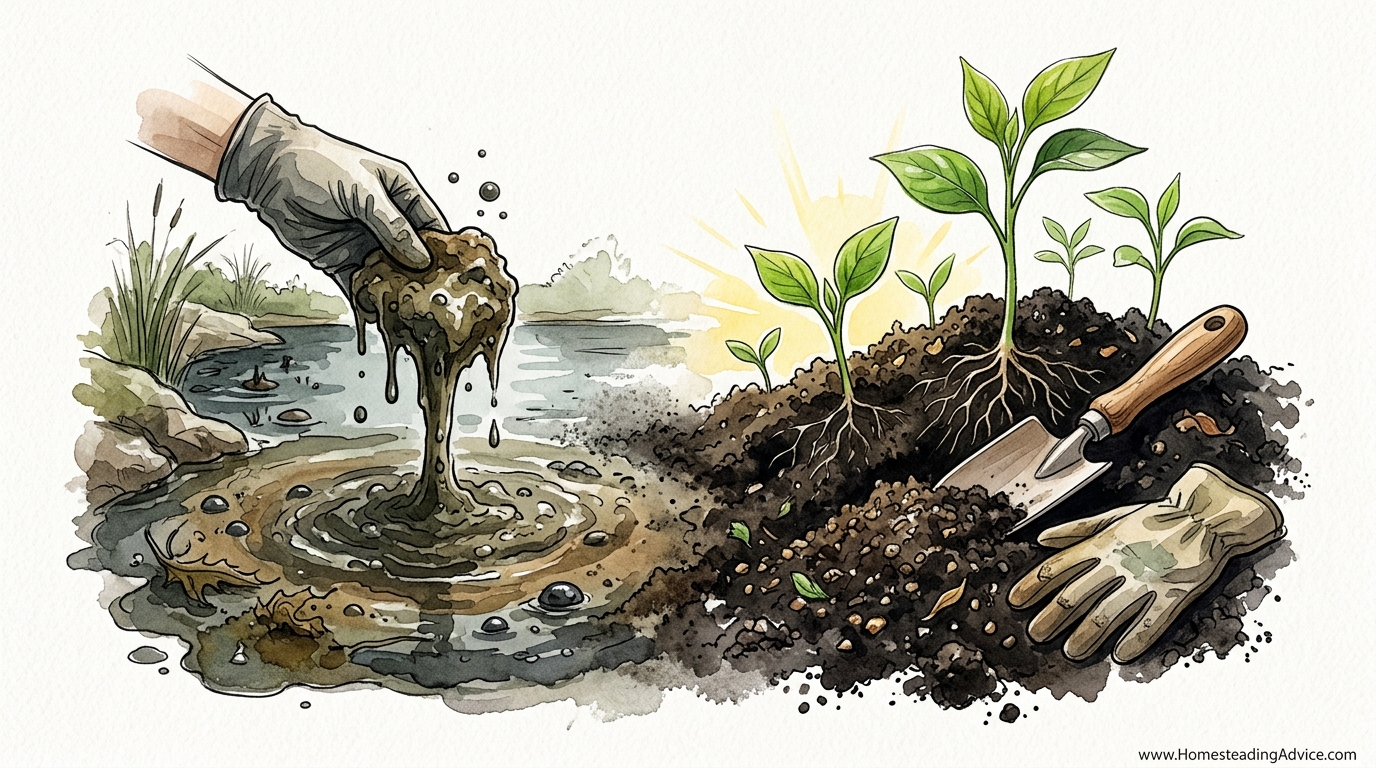
That stinky mess at the bottom of your pond is actually the world’s most powerful growth hormone. Most pond owners see the ‘muck’ at the bottom as a cleaning nightmare. In reality, that sediment is a concentrated powerhouse of nitrogen and minerals. Instead of paying for disposal, learn how to turn your pond’s waste into a fuel that will make your garden the envy of the neighborhood.
Whether you call it muck, sludge, or sediment, that dark layer of organic matter is the accumulated life-force of your pond’s ecosystem. For generations, farmers and self-reliant families have looked at the silt in their waterways not as a nuisance, but as a biological bank account. Every fallen leaf, every bit of fish waste, and every dead algae cell eventually settles into this nutrient-dense “black gold.” Reclaiming this material is a step back toward a way of life where nothing is wasted and the land provides for itself.
Managing a pond often feels like a constant battle against the elements. You fight to keep the water clear and the fish healthy. However, the very things that make a pond look “dirty” to the untrained eye are the exact components that a vegetable garden or orchard craves. Understanding how to harvest and use this resource safely and effectively is a skill that bridges the gap between aquatic maintenance and master gardening.
How To Use Pond Sludge As Fertilizer
Pond sludge is a complex mixture of organic and inorganic materials that settles at the bottom of any standing body of water. It is primarily composed of decaying aquatic vegetation, algae, fish excrement, and wind-blown debris like leaves or grass clippings. Over time, these materials are broken down by specialized bacteria. In the deep, oxygen-poor environment of a pond floor, this decomposition creates a thick, dark, and often pungent material known as anaerobic sediment.
In the real world, this sludge acts as a slow-release fertilizer. While commercial fertilizers provide a quick hit of chemicals that can easily wash away, pond muck is a stable form of nutrition. It mimics the natural flooding cycles of great river valleys like the Nile, where annual silt deposits provided the fertility for entire civilizations. When you move this sediment from your pond to your garden, you are essentially performing a small-scale version of this ancient renewal process.
Think of pond muck as a “concentrate” of your local environment. If your pond is surrounded by oak trees, your sludge will be rich in tannins and carbon. If you keep a heavy population of koi or catfish, the muck will be exceptionally high in phosphorus and nitrogen. Because it is already partially decomposed, it is more readily available to soil microbes than fresh raw materials. It serves as both a soil conditioner and a nutrient source, improving the physical structure of the earth while feeding the plants within it.
The Biological Engine: How Pond Muck Works
The magic of pond sediment lies in its microbial diversity. At the bottom of a pond, the environment is often anaerobic, meaning it lacks oxygen. This leads to the development of specific bacteria that thrive in these conditions. When you bring this muck into the sunlight and air of your garden, those anaerobic microbes quickly die off and are replaced by aerobic ones. This transition releases a surge of nutrients into the soil.
Nitrogen is the primary driver of leafy growth, and pond sludge is brimming with it. As algae and fish waste break down, they release nitrogen in various forms. In many cases, the nitrogen content of pond sediment is comparable to or even exceeds that of aged cow manure. Phosphorus and potassium—the other two “big” nutrients in the N-P-K ratio—are also present in significant quantities. These minerals are essential for root development and fruit production, making the sludge a “complete” food for your garden.
Beyond the major nutrients, pond muck contains trace minerals that are often missing from commercial blends. Minerals like calcium, magnesium, and sulfur, along with micronutrients like iron and manganese, are all captured in the silt. These are the elements that give vegetables their deep color and robust flavor. Because these minerals are bound to organic matter, they do not leach out of the soil during heavy rains, ensuring your plants have a steady supply throughout the growing season.
Step-by-Step: Harvesting the Black Gold
Harvesting sludge does not require expensive machinery, though the right tools make the job less back-breaking. The method you choose depends on the size of your pond and the depth of the muck layer.
Manual Dredging with a Muck Shovel
For small garden ponds or shallow edges of larger ponds, a simple muck shovel or a sturdy garden rake is often sufficient. These tools allow you to reach down and pull the heavy sediment onto the bank. It is best to do this in late summer or early autumn when water levels are naturally lower. This timing also allows the sediment to sit on the bank for a few days to drain, reducing the weight before you move it to the garden.
Using a Pond Vacuum
A pond vacuum is a highly efficient tool for modern pond owners. These machines work similarly to a shop vac but are designed to handle water and thick solids. The vacuum sucks up the muck and discharges it through a hose. Instead of letting that discharge go into a drain, aim the hose directly into your garden beds or a designated drying area. This method is excellent for getting into tight spots between rocks or under lily pads without disturbing the entire pond floor.
Mechanical Pumping and Drawdowns
On a larger scale, such as a farm pond or a small lake, you might consider a mechanical pump or a partial drawdown. Pumping involves using a submersible solids-handling pump to move the slurry through a large-diameter pipe. If the pond has a drain valve, a drawdown involves lowering the water level until the bottom is exposed. Once the muck dries slightly and develops a “cracked” surface, it can be scraped up with a bucket loader or skid-steer. This is a more intensive process but can yield tons of high-quality fertilizer in a single weekend.
Methods of Application
Once you have the sludge out of the water, you have several options for how to apply it. The right choice depends on the maturity of your soil and the type of plants you are growing.
The Composting Method (Recommended)
Mixing pond sludge into a compost pile is the safest and most effective way to use it. Start by laying down a 6-inch (15 cm) layer of “brown” carbon-rich material, such as straw, dried leaves, or shredded cardboard. Spread a 3-inch (7.5 cm) layer of wet pond muck over the top. The high nitrogen in the muck will act as an accelerant, heating up the compost pile and speeding up the breakdown of the brown materials. Turn the pile every few days to introduce oxygen, which will kill off any remaining anaerobic bacteria and eliminate odors.
Direct Application and Sheet Mulching
If your sludge consists mostly of decayed leaves and has a mild earthy smell, you can apply it directly to the surface of your garden beds. Spread it in a thin layer, no more than 1 inch (2.5 cm) thick, and cover it immediately with a layer of straw or wood chips. This “sheet mulching” technique prevents the sun from baking the muck into a hard, impenetrable crust. This method works well for established fruit trees and perennial shrubs that can handle the raw nutrient boost.
Creating Pond Tea
For a liquid fertilizer, you can create a “pond tea.” Fill a 5-gallon (19-liter) bucket about one-third full of pond sludge and fill the rest with water. Stir the mixture vigorously and let it sit for 24 to 48 hours. The resulting dark liquid can be used to water heavy feeders like tomatoes, pumpkins, or corn. This provides a quick-acting shot of nutrients directly to the root zone and is particularly effective during the mid-summer growth spurt.
Benefits of Using Pond Sludge
The advantages of this practice extend far beyond just saving money on store-bought bags of fertilizer. Using pond waste is a form of “closed-loop” gardening that benefits both the water and the land.
* Extreme Moisture Retention: The fine particles in pond silt are excellent at holding onto water. Mixing this material into sandy soils can significantly reduce the amount of irrigation your garden needs.
* Superior Soil Structure: The organic matter in muck helps to aggregate soil particles. In heavy clay soils, it can help break up the density, allowing roots to penetrate deeper and improving overall drainage.
* Rich Microbial Life: You are not just adding chemicals; you are adding a living community of microorganisms. These microbes help “unlock” nutrients already present in your garden soil, making them available to your plants.
* Sustainable Resource Management: By recycling your own pond waste, you eliminate the carbon footprint associated with manufacturing and transporting commercial fertilizers. It is the ultimate form of local, sustainable agriculture.
Challenges and Common Mistakes
While pond sludge is a powerful tool, it is not without its pitfalls. Jumping in without a plan can lead to smelly messes or, in the worst cases, damaged plants.
One of the most common mistakes is applying fresh, dripping-wet sludge directly against the stems of sensitive plants. Because the muck is often anaerobic, it can be quite acidic and may contain high levels of organic acids that can “burn” tender roots. Always allow the muck to drain or mix it with soil to buffer the pH before use.
Odors are another significant challenge. Freshly dredged muck can have a strong “rotten egg” smell due to hydrogen sulfide gas produced by anaerobic bacteria. This is natural, but it can be unpleasant for neighbors. Burying the muck under a layer of soil or carbon-rich mulch will trap these odors and allow the bacteria to transition to an aerobic state without causing a stink.
Failure to consider the “crusting” effect is a frequent error. Pond silt is often composed of very fine clay and organic particles. If left to dry in the direct sun without being incorporated into the soil, it can form a hard, concrete-like layer that prevents water from reaching the roots. Always mix the sludge into the top few inches of soil or keep it covered with a thick mulch.
Limitations: When This May Not Be Ideal
Pond sludge is a reflection of the water it comes from. If your pond is not healthy or is located in a high-risk area, the sediment may not be suitable for a garden, especially one meant for food production.
Urban runoff is a major concern. If your pond collects water from a street or a large parking lot, the sludge may contain heavy metals like lead or cadmium, as well as petroleum residues. Similarly, if you live in an area with heavy industrial agriculture, the sediment may have high concentrations of pesticide and herbicide runoff. In these cases, it is best to use the sludge only for ornamental plants or have the sediment tested by a laboratory before using it on vegetables.
Salt levels can also be a limitation. If you use salt to treat fish diseases in a koi pond, or if your pond is in a coastal area prone to salt spray, the sediment may have high salinity. Most garden plants have a low tolerance for salt, which can draw moisture out of the roots and eventually kill the plant. If you suspect high salt levels, rinse the sludge with fresh water on a draining bed before applying it to your soil.
Comparison: Pond Sludge vs. Commercial Fertilizer
To understand the value of pond muck, it helps to see how it stacks up against more traditional options.
| Feature | Pond Sludge | Synthetic Fertilizer | Aged Cow Manure |
|---|---|---|---|
| Cost | Free (DIY labor only) | High (Ongoing expense) | Moderate |
| Nutrient Release | Slow & Steady | Immediate/Brief | Slow |
| Soil Conditioning | Excellent | None (Can degrade soil) | Very Good |
| Microbial Diversity | Very High | None | High |
| Risk of Runoff | Low (Bound to organic matter) | High | Moderate |
Practical Tips and Best Practices
Following a few simple rules will ensure you get the most out of your pond’s “black gold” without any of the headaches.
* Test Your Soil First: Before adding a massive amount of muck, know what your garden actually needs. A simple soil test can tell you if you are already high in phosphorus, which is common in pond sediment.
* Use the “Draining Bed” Technique: Build a simple frame out of scrap wood and line it with a fine mesh or landscape fabric. Pump or shovel your muck into this frame and let it sit for a week. The water will drain out, leaving you with a crumbly, manageable “cake” of fertilizer.
* Timing is Everything: The best time to harvest is early spring or late fall. In the spring, the nutrients are ready for the new growing season. In the fall, you can “sheet mulch” your beds and let the winter weather break the muck down further.
* Aerate Your Pond: A well-aerated pond produces better sludge. Oxygenated water supports a healthier community of microbes, which in turn creates a more balanced nutrient profile in the sediment.
* Watch for Weed Seeds: Pond muck can occasionally contain seeds from aquatic weeds or nearby grasses. Composting the sludge at high temperatures (around 140°F or 60°C) is the only way to ensure these seeds are neutralized.
Advanced Considerations: Beyond the Garden Bed
For those looking to take their self-reliance to the next level, pond sludge can be integrated into larger systems like bio-swales or land reclamation projects.
If you have an area of your property with poor, eroded soil, “hydraulic mulching” with pond sediment can jumpstart the recovery process. By mixing the sludge with water and native grass seeds and spraying it over the barren area, you provide the seeds with the moisture and nutrients they need to establish themselves in harsh conditions. This is a common practice in professional ecological restoration and can be easily adapted for home use.
Integrating pond sludge with biochar is another advanced technique. Biochar is a highly porous form of charcoal that acts as a “sponge” for nutrients. By soaking biochar in a liquid pond tea or mixing it with wet sludge, you “charge” the char with minerals and microbes. When this charged biochar is added to the soil, it creates a permanent habitat for beneficial fungi and bacteria, providing a fertility boost that can last for decades.
Scenario: The 1,000 Square Foot Vegetable Garden
Consider a typical home gardener with a 1,000 square foot (93 square meter) vegetable plot and a medium-sized backyard pond. Over the course of a year, the pond might accumulate roughly 20 cubic feet (0.56 cubic meters) of thick muck.
By harvesting this muck in the fall and mixing it with two bales of straw, the gardener creates a sheet mulch that covers the entire 1,000 square feet. Over the winter, the nitrogen from the muck and the carbon from the straw fuse together. By spring planting time, the soil is dark, crumbly, and teeming with earthworms. This single application can replace up to 50 pounds (22 kg) of high-nitrogen synthetic fertilizer, saving the gardener approximately $40 to $60 while significantly improving the long-term health of the soil.
Furthermore, the act of removing that muck from the pond improves the water quality. With less organic matter to decay at the bottom, the pond’s oxygen levels remain higher, the water stays clearer, and the fish grow larger. It is a rare “win-win” scenario where the maintenance of one system directly fuels the success of another.
Final Thoughts
Turning your pond’s waste into garden fuel is a testament to the wisdom of working with nature rather than against it. That stinky mess at the bottom of the pond is not a problem to be hidden away; it is a vital resource that has been concentrated and prepared by the very environment you live in. By reclaiming this sediment, you are taking a meaningful step toward true self-reliance and environmental stewardship.
The transition from “cleaning a pond” to “harvesting fertilizer” requires a shift in perspective, but the rewards are tangible. You will see it in the deeper green of your kale, the increased yield of your fruit trees, and the overall resilience of your landscape. Do not be afraid of the mess or the hard work involved. The “pioneer grit” required to manage your land this way pays dividends in the form of a healthy, productive homestead.
Start small, perhaps with just a few buckets around a single tree, and observe the results. Once you see the power of this natural growth hormone for yourself, you will never look at that pond muck the same way again. Experiment with different ratios, try the “pond tea” on your heavy feeders, and watch as your garden transforms into a lush, thriving oasis.